
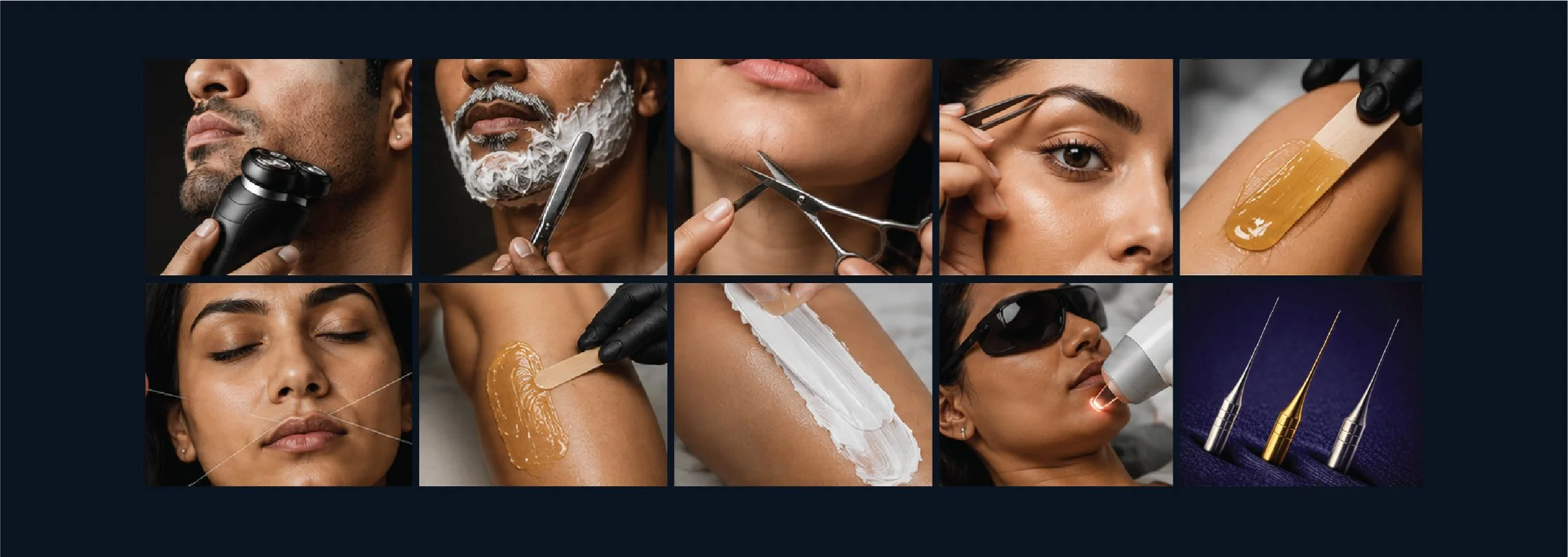
Hair Removal Methods
Did You
Know…
Other hair removal professionals are legally forbidden to claim their method provides permanent removal? That’s right! They are only allowed to promise permanent or temporary hair reduction. Noting that difference, electrolysis is the only method acknowledged by the FDA as a permanent hair removal solution.
That’s not to say other methods can’t play a role in helping to achieve some of your desired results; in fact, some of them even complement electrolysis.
“Make your choices reflect your hopes, not your fears.”
Most Frequently Used Methods
Laser
Hair removal lasers beam pulses of light into the hair follicle attempting to destroy it. Its success rate relies on the amount of pigment in the hair as well as the amount of contrast between the hair and the skin. This procedure is restricted in most states to only being administered by a medically licensed professional because of its potential risks including paradoxical hypertrichosis.
Laser hair removal is NOT FDA approved as a permanent hair removal method, nor is it covered by insurance for gender change procedures. More on Laser Hair Removal
Waxing
Waxing, a form of epilating, is the process of hair removal from the root by adhering wax to body hair, and then removing this covering taking the hair from the follicle along with it.
Strip waxing, (soft wax) is accomplished by spreading wax thinly over the skin. A cloth or paper strip is applied, pressed firmly, and then quickly ripped against the direction of hair growth.
Stripless wax, (hard wax) is also applied directly to the skin. The wax then hardens when it cools, allowing an esthetician to easily remove it without the aid of strips. This method is beneficial for those with sensitive skin.
Sugaring
Also known as Persian waxing, sugaring has been around since 1900 B.C. but has significantly increased in popularity in the last few years because it’s a natural alternative to modern waxing. Its most basic ingredients include sugar, honey, lemon juice and water, making it water-soluble and absent of harmful chemicals. Sugaring, also a form of epilating, compares closest to stripless-waxing in the way it’s applied to the skin and in the results achieved when done by a trained esthetician.
Threading
Threading, another form of epilating, is a method of hair removal originating in Iran, India, Central Asia and China and has become most popularly used in Western countries for trimming and shaping the eyebrows.
Tweezing
Tweezing, yet another form of epilating, is the removal or pluck of the hair from the follicle, usually one at a time, using a pair of handheld tweezers. Like threading, tweezing allows for better precision over waxing and over sugaring.
Shaving (clipping)
Shaving, or clipping, is the removal of hair using a razor or any other bladed instrument to slice hair at the level of the skin. Moisturizers that contain vitamin E have helped some women shave less frequently.
Electronic Epilating
An electronic epilator is a handheld device with a rotating roller that, when glided over the skin, removes unwanted hair like a bunch of tweezers all working at once.
Depilatory Creams
A depilatory is a chemical composition used to remove hair by breaking down its protein bonds. It comes in several forms like gel, powder, and even roll-on sprays; however, the most popular are in the lotion & creams category. Depilatory creams take up to 15 minutes to work once applied depending on the thickness and density of the hair being treated. Once complete, the product can be wiped off with a cloth.
COMPARE
CONTRAST
COMPLEMENT
Choose the method that aligns with your goals, not just your next appointment.
We know it's hard to decide which hair removal method is best for you. To make it a little easier, we took the most frequently used methods and provided information about how long its results last, cost, advantages, obstacles, recommendations on who should and should not use them, the pain factor, and what other method(s) it compares to in terms of what happens either on or beneath the surface of the skin.
Finally, we’ve also included which ones can be paired together to complement your desired results without jeopardizing the integrity of the other.
💡 download our hair removal comparison chart

-
Laser hair removal provides long-lasting hair reduction by targeting the pigment within the hair follicle. While it can significantly reduce hair growth for many people, it is not considered a permanent hair removal method, and results vary based on hair color, skin tone, and hormonal influences.
Results Last
Approximately 6–12 months before maintenance treatments are typically needed.
Investment
$$$$$
Laser treatments often require multiple sessions and periodic maintenance, making them one of the more expensive long-term hair reduction options.
Advantages
Fast treatment sessions
Long-lasting hair reduction
Regrowth is often finer and lighter
Suitable for many body areas
Considerations
Hair eventually returns
Results depend on hair pigment and skin tone
Cannot treat gray, blonde, white, or red hair effectively
Cannot be used over tattoos
May stimulate facial peach fuzz (vellus hair) to become darker and coarser in some individuals
Temporary redness and swelling are common
Precision is limited compared to electrolysis
Recommended For
Clients with dark hair and lighter skin tones who are considered good laser candidates.
Not Recommended For
Facial peach fuzz
Gray, blonde, red, or white hair
Tattooed areas
Many darker skin tones due to increased treatment risks and reduced effectiveness
Pain Level: High
Many people describe the sensation as a series of rubber bands snapping against the skin. Treatments are generally more sensitive over thinner skin and areas closer to the body's centerline.
Relationship to Electrolysis
Laser and electrolysis are often used sequentially, not simultaneously. Laser can reduce large volumes of pigmented hair, while electrolysis permanently removes the individual hairs that laser cannot successfully treat.
Good to Know
Laser relies on pigment to work, meaning not everyone is a candidate. Because the treatment cannot target every hair precisely, many clients choose electrolysis after laser treatments to permanently remove remaining hairs. Always seek treatment from a properly trained provider and request a test patch before beginning treatment.
Learn more about laser » hair removal before getting it on your face and upper torso.
-
Waxing is one of the most popular temporary hair removal methods, removing hair from the follicle to leave skin smooth for several weeks. While convenient and widely available, it requires lifelong maintenance to sustain results.
Results Last
Approximately 2–3 weeks before new hair growth appears.
Investment
$$
Individual appointments are relatively affordable; however, because waxing does not provide permanent results, the lifetime cost can add up to thousands of dollars.
Advantages
Can be performed professionally or at home
Quick treatment sessions
Suitable for most body areas
Lower upfront cost than permanent hair removal
Considerations
Hair always grows back
Can be uncomfortable, particularly in sensitive areas
May contribute to ingrown hairs by distorting the follicle
Temporary redness and swelling are common
Less precise than electrolysis and often requires tweezing for stray hairs
Recommended For
Individuals seeking temporary hair removal who are not currently undergoing electrolysis treatments.
Not Recommended For
Clients receiving electrolysis
Individuals with very sensitive skin
Pain Level: Medium
Most people describe waxing as moderately uncomfortable. Sensitivity tends to increase on thinner skin and areas closer to the center of the body. Some women also notice increased sensitivity during menstruation.
Relationship to Electrolysis
Not Recommended During Treatment
Waxing removes the entire hair from the follicle, making it impossible for your electrologist to treat that follicle until a new hair grows back.
Good to Know
Although each appointment may seem inexpensive, the recurring cost of professional waxing over many years often exceeds the investment required for permanent hair removal.
-
Sugaring is a temporary hair removal method that uses a natural sugar-based paste to remove hair from the follicle. Many people with sensitive skin prefer sugaring because of its simple ingredients and gentler application.
Results Last
Approximately 1–3 weeks before regrowth occurs.
Investment
$$
Like waxing, individual appointments are relatively affordable, but ongoing maintenance results in significant long-term costs.
Advantages
Uses natural ingredients
Often gentler on sensitive skin than waxing
Quick treatment sessions
Suitable for most body areas
Can be performed at home
Considerations
Hair always grows back
May cause temporary redness or irritation
Can contribute to ingrown hairs
Less precise than electrolysis
Requires regular maintenance
Recommended For
Individuals seeking temporary hair removal who are not receiving electrolysis.
Not Recommended For
Clients currently receiving electrolysis
Individuals with extremely reactive or compromised skin
Pain Level: Medium
While many clients find sugaring slightly more comfortable than waxing, sensitivity varies depending on the treatment area and individual pain tolerance.
Relationship to Electrolysis
Not Recommended During Treatment
Like waxing, sugaring removes the entire hair from the follicle, preventing electrolysis from treating that follicle until new growth returns.
Good to Know
Because the paste is made from natural ingredients, many clients with sensitive skin find sugaring to be a gentler alternative to traditional waxing.
-
Tweezing removes individual hairs directly from the follicle, making it an effective option for small areas and stray hairs. While precise, it is time-consuming and not recommended during an electrolysis treatment plan.
Results Last
Approximately 1–3 weeks.
Investment
$
A quality pair of tweezers is inexpensive and can last for years with proper care.
Advantages
Highly precise
Inexpensive
Portable and convenient
Excellent for isolated hairs
Complements temporary methods like waxing, threading, and laser by removing missed hairs
Considerations
Hair always grows back
Slow for large treatment areas
May contribute to ingrown hairs
Temporary redness and swelling are common
Dull or overly sharp tweezers may break hairs rather than remove them completely
Recommended For
Small areas with only a few unwanted hairs
Individuals not currently receiving electrolysis
Not Recommended For
Clients undergoing electrolysis
Large or densely populated treatment areas
Pain Level: Low
Most people describe tweezing as mildly uncomfortable.
Relationship to Electrolysis
Not Recommended During Treatment
Tweezing removes the hair your electrologist needs to permanently treat, delaying progress until a new hair grows into the follicle.
Good to Know
Never use tweezers to dig beneath the skin to remove an ingrown hair. Instead, allow the skin to heal or seek professional guidance before attempting removal.
-
Threading is a temporary hair removal technique that uses twisted cotton thread to remove individual hairs from the follicle. It is especially popular for facial shaping because it offers greater precision than waxing without the use of heat or chemicals.
Results Last
Approximately 1–3 weeks before regrowth occurs.
Investment
$
Individual treatments are relatively inexpensive, though regular maintenance is required to maintain results.
Advantages
Precise hair removal
Quick treatment sessions
Safe for most body areas
No waxes or chemicals
Less messy than waxing
Ideal for shaping eyebrows and facial hair
Considerations
Hair always grows back
Can cause temporary redness or irritation
May contribute to ingrown hairs
Requires ongoing maintenance
Precision is limited compared to electrolysis
Recommended For
Individuals seeking temporary facial or body hair removal who are not currently receiving electrolysis.
Not Recommended For
Clients currently undergoing electrolysis
Pain Level: Low
When performed correctly, threading is generally well tolerated and causes only mild discomfort.
Relationship to Electrolysis
Not Recommended During Treatment
Threading removes the entire hair from the follicle, preventing your electrologist from treating that follicle until new growth returns.
Good to Know
Several threading techniques exist, including hand, neck, and mouth methods. The mouth-holding technique is often considered the fastest and most precise when performed by a trained practitioner.
-
Shaving removes hair at the skin's surface, making it one of the fastest and most accessible methods of temporary hair removal. While results are short-lived, shaving does not interfere with electrolysis treatments.
Results Last
Approximately 1–3 days.
Investment
$
One of the least expensive hair removal methods available.
Advantages
Quick and convenient
Can be performed at home
Suitable for nearly all body areas
Inexpensive
Virtually painless when performed correctly
Considerations
Hair returns quickly because the follicle remains intact
May contribute to razor bumps and ingrown hairs, especially on curly hair
Requires proper shaving products to help protect the skin
Improper technique can cause cuts or irritation
Recommended For
Anyone seeking a quick, temporary grooming solution.
Not Recommended For
Individuals with highly sensitive skin
Those prone to severe razor bumps or ingrown hairs
Anyone seeking long-lasting hair removal
Pain Level: Low
Shaving itself is generally painless when performed correctly.
Relationship to Electrolysis
Recommended Between Treatments
If grooming is needed between appointments, shaving is one of the preferred methods because it leaves the hair follicle intact for future electrolysis treatments.
Good to Know
Replace razor blades regularly to reduce the risk of irritation and bacterial contamination. A quality shaving cream and moisturizer containing soothing ingredients such as aloe vera or vitamin E may help minimize skin irritation.
-
Electric epilators use rotating tweezers to remove multiple hairs from the follicle simultaneously. They offer longer-lasting results than shaving while providing the convenience of at-home hair removal.
Results Last
Approximately 1–3 weeks.
Investment
$$
The initial purchase of an epilator can be more expensive than a razor, but the device can last for years with proper care.
Advantages
Convenient at-home use
Removes multiple hairs at once
Suitable for larger treatment areas
No creams or wax required
Less ongoing expense than professional waxing
Considerations
Hair always grows back
May contribute to ingrown hairs
Can cause temporary redness
Less precise than electrolysis
Individual stray hairs often require tweezing
Recommended For
Individuals seeking temporary hair removal who are not receiving electrolysis.
Not Recommended For
Clients currently receiving electrolysis
Pain Level
Low to Medium
Most epilators offer adjustable speeds. Lower speeds are generally more comfortable but require longer treatment times.
Relationship to Electrolysis
Not Recommended During Treatment
Like waxing, sugaring, and threading, epilating removes the hair needed for permanent electrolysis treatment.
Good to Know
Many modern epilators are waterproof and designed for use in the shower, where warm water may improve comfort during treatment.
-
Depilatory creams dissolve hair at or just below the skin's surface using chemical ingredients. They provide a temporary alternative to shaving without using a blade.
Results Last
Approximately 1–3 days.
Investment
$
An inexpensive option for temporary hair removal.
Advantages
Easy to use at home
Fast application
No razor required
Can be used between electrolysis appointments
Inexpensive for individual use
Considerations
Hair returns quickly
Strong odor is common
Can irritate sensitive skin
Chemical ingredients may cause allergic reactions
Does not provide long-lasting results
Recommended For
Individuals without sensitive skin seeking temporary hair removal.
Not Recommended For
Sensitive or reactive skin
Individuals seeking long-term hair removal
Pain Level: Low
Most users experience little discomfort, though a mild tingling sensation may occur during application.
Relationship to Electrolysis
Recommended Between Treatments
Like shaving, depilatory creams remove only the visible portion of the hair while leaving the follicle intact, allowing electrolysis treatments to continue as scheduled.
Good to Know
Always perform a patch test before using a depilatory cream. If burning, excessive irritation, or a rash develops, remove the product immediately and discontinue use.
-
Electrolysis is the only FDA-recognized method of permanent hair removal. By treating each individual follicle, electrolysis permanently disables the hair's ability to grow again, making it suitable for all skin tones, all hair colors, and nearly every area of the body.
Results Last
Forever, because it’s permanent!
Once a follicle has been successfully treated, it will not produce another hair.
Investment
$$$$
Electrolysis requires an investment during the treatment plan, but because results are permanent, there is no lifelong maintenance required. Over time, it often becomes the most cost-effective solution for permanent hair removal.
Advantages
Permanent results
Safe for all skin tones
Effective on all natural hair colors, including gray, blonde, red, and white
Highly precise
Can safely treat hairs surrounding tattoos
Multiple treatment modalities allow treatment to be customized for comfort and hair type
An excellent finishing treatment following laser hair reduction
Considerations
Cannot be performed at home
Requires multiple appointments because hair grows in cycles
Progress occurs gradually over time
Temporary redness or swelling is common following treatment
Recommended For
Anyone seeking permanent hair removal
Individuals with gray, blonde, red, or white hair
Clients who are not candidates for laser
Clients seeking to permanently remove hairs remaining after laser treatments
Hair growing within or around tattoos
Not Recommended For
Individuals who are pregnant
Individuals with certain healing or clotting disorders without medical clearance
Those prone to keloid formation without physician approval
Pain Level: Medium to High
Comfort varies depending on the treatment area, hair type, and the electrolysis modality being used. Your electrologist can adjust treatment settings and techniques to help maximize comfort throughout your treatment plan.
Relationship to Electrolysis
The Gold Standard for Permanent Hair Removal
Unlike temporary methods that require ongoing maintenance, electrolysis permanently destroys the hair-producing cells within the follicle. Once treated successfully, that follicle will never produce another hair.
Good to Know
Because electrolysis treats each follicle individually, patience and consistency are essential. Hair grows in natural cycles, so multiple appointments are needed to treat follicles as they become active. Although the treatment plan requires commitment, the reward is permanent freedom from unwanted hair—without the lifelong maintenance associated with shaving, waxing, sugaring, threading, epilating, or periodic laser treatments.