Permanence Over Time.
Electrolysis permanently removes unwanted hair by treating each individual hair follicle at its source.
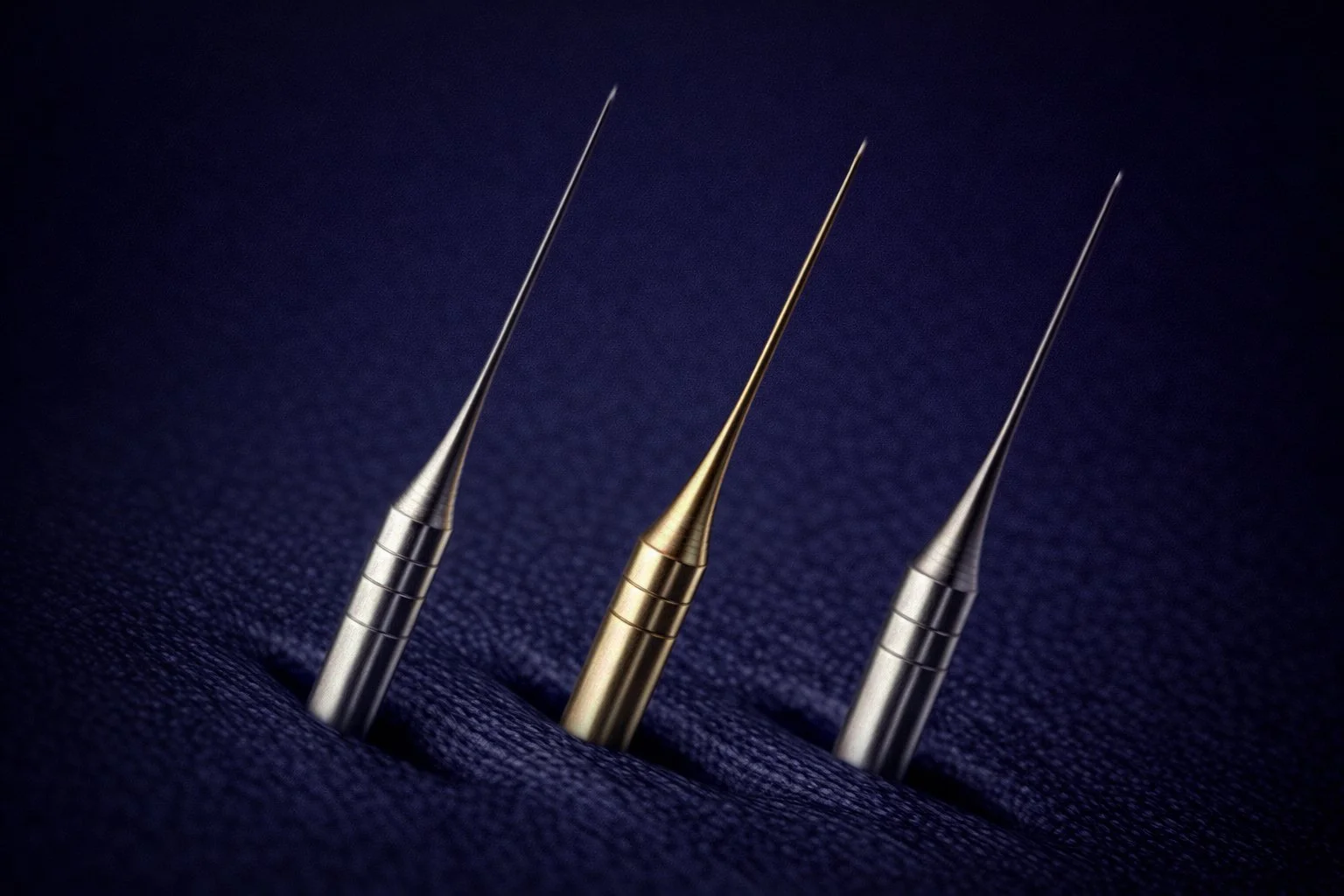
During treatment, a sterile, single-use probe is carefully guided into the natural opening of the follicle. A controlled electrical current is then delivered to the area responsible for producing and regenerating the hair. Once those growth cells have been adequately treated, the hair is gently removed from the follicle without force. source »
The process is precise, progressive, and highly individualized.
Electrolysis does not depend on the color of the hair or the amount of pigment in the skin. Because treatment occurs inside the follicle rather than targeting pigment, it can be used on every skin tone and on hair that is black, brown, blond, gray, white, red, fine, coarse, straight, curly, or tightly textured. source »
Electrolysis and be done with it For good.™
The Follicle Is the Target
A hair is more than the strand you see above your skin.
Beneath the surface is a follicle: a small, tube-like structure containing the areas that support hair formation and regrowth. Removing the visible hair alone does not eliminate the follicle’s ability to produce another one.
Shaving cuts the hair at the surface.
Tweezing, waxing, threading, and sugaring pull the hair from the follicle.
Depilatory creams dissolve part of the visible hair.
Laser and light-based treatments use pigment to deliver energy across an area and are generally described in terms of long-term or permanent hair reduction.
Electrolysis works differently.
It treats the individual follicle and disrupts the cells responsible for future hair growth. When a follicle has been successfully treated, that follicle can no longer produce another hair. source »
Permanent Resolution. Delivered with Care.
Electrolysis is detailed work.
It requires precision from the practitioner, consistency from the client, and enough time to treat the full pattern of growth.
When those elements come together, the result is not temporary reduction or another cycle of maintenance.
It is permanent hair removal.
The Three Electrolysis Modalities
Modern electrolysis uses one of three established treatment methods, known as modalities. Each delivers energy differently, but all are intended to permanently disable the follicle’s growth cells.
Which Method Is Best?
There is no single modality that is automatically best for every person or every hair.
The most appropriate method depends on the treatment area, follicle characteristics, skin response, practitioner training, and treatment plan. A skilled electrologist may use one modality consistently or move between methods as the work progresses.
At Electrolysis Beauty Lounge, modality and settings are selected intentionally—not by habit.
Galvanic Electrolysis
Galvanic electrolysis uses direct current to create a chemical reaction inside the follicle.
The natural salt and moisture present within the tissue interact with the current to form a small amount of sodium hydroxide, historically called lye. This chemical reaction disrupts the cells responsible for hair growth.
Galvanic treatment works chemically and may require the current to remain in the follicle longer than thermolysis.
Thermolysis
Thermolysis uses high-frequency alternating current to create controlled heat within the follicle.
That heat coagulates and disables the tissue responsible for producing the hair.
Thermolysis is often delivered quickly and can be adapted through different timing and intensity patterns according to the hair and treatment area.
The Blend
The blend combines galvanic current and thermolysis.
Thermolysis accelerates the chemical reaction created by galvanic current, allowing chemical and heat energy to work together within the follicle.
Blend may be selected for certain coarse, deep, curved, distorted, or previously manipulated follicles.
What Happens During Treatment
01
The Follicle Is Assessed
Every hair provides information.
Its thickness, texture, depth, direction of growth, location, and the condition of the surrounding skin help determine how treatment should be approached. Curved, distorted, previously tweezed, ingrown, or hormonally influenced hairs may require a more individualized strategy.
This is one reason visible hair should be long enough for the electrologist to see its direction and manipulate it with a tweezer without picking at the skin.
02
A Sterile Probe Is Inserted
A very fine probe is guided into the follicle’s natural opening alongside the hair shaft.
The skin is not pierced in the way it would be during an injection. A correct insertion follows the existing follicular canal beneath the surface of the skin.
Probe size, insertion depth, angle, and timing are selected according to the characteristics of the hair and follicle.
03
Controlled Energy Is Delivered
A carefully selected amount of electrical energy travels through the probe to the treatment area within the follicle.
The goal is to disable the structures responsible for producing and regenerating the hair while respecting the surrounding skin.
Treatment settings are not one-size-fits-all. They may be adjusted according to:
Hair thickness and depth
Follicle shape and direction
Treatment area
Skin response
Moisture within the follicle
Previous methods of hair removal
Client sensitivity and comfort
The modality being used
04
The Hair Is Gently Released
Following adequate treatment, the hair should slide from the follicle with little or no resistance.
It should not feel as though it is being forcefully tweezed.
A smooth release is one of several signs an electrologist uses when evaluating the treatment of that follicle.
05
The Skin Begins Its Recovery
Temporary redness, mild swelling around individual follicles, warmth, or tenderness may occur after treatment. These responses are usually part of the skin’s normal inflammatory and healing process. Slight temporary discoloration can also occur in some clients. source »
Your post-treatment instructions are designed to protect the treated area while the skin settles.
-
At Electrolysis Beauty Lounge, treatment is guided by:
Clinical Integrity
We treat according to the hair, follicle, skin, and response—not a generic setting.
Structured Planning
Appointments are intentionally scheduled to support clearance, healing, and long-term progress.
Education
You deserve to understand what is happening, why it takes time, and what your role is in the process.
Culturally Competent Care
Skin tone, hair texture, identity, hormonal context, and lived experience are clinically relevant—not decorative talking points.
Respect
Your time, money, skin, comfort, and goals matter.
-
Electrolysis is collaborative.
For the strongest possible progression:
Keep appointments as consistently as possible.
Avoid tweezing, waxing, threading, or sugaring the treatment area.
Allow enough visible growth before the appointment.
Follow pre- and post-treatment instructions ».
Avoid picking, scratching, or removing temporary crusting.
Protect healing skin from unnecessary friction and sun exposure.
Share medication, health, or skin changes that may affect treatment.
Ask questions whenever you need clarity.
Your electrologist provides the treatment.
Your consistency allows the process to work across time.
-
Permanent does not mean every visible hair disappears after one appointment.
It means that once the growth-producing cells of an individual follicle have been adequately destroyed, that treated follicle can no longer produce another hair. source »
The visible transformation happens gradually because follicles must be treated individually and because hair appears in cycles.
That is the discipline of electrolysis:
One follicle at a time.
One growth cycle at a time.
Until temporary management becomes permanent resolution. -
Electrolysis permanently treats follicles one at a time, but not every follicle is producing a visible hair at the same moment.
Hair grows in repeating cycles.
Anagen: Active Growth
During anagen, the hair is actively growing and is connected to the structures that support its development.
This stage generally offers the strongest opportunity for effective treatment because the growing hair provides access to the active lower portion of the follicle.
Catagen: Transition
During catagen, active growth slows and the follicle begins to change.
The lower portion starts to regress, and the hair gradually disconnects from some of the structures that supported active growth.
Telogen: Resting
During telogen, the hair is resting.
The visible strand may remain in place for a period before shedding, while the follicle later prepares to begin another growth cycle.
Exogen: Release
Exogen describes the stage in which the older hair releases and sheds from the follicle.
Because different follicles are in different stages at the same time, the hairs visible today represent only part of the area’s total growth pattern. Additional hairs may appear later—not because treated follicles suddenly recovered, but because other follicles entered a visible stage after the earlier appointment.
That is why consistency matters.
Regular treatment allows us to address newly visible hairs as they cycle into a treatable stage.
-
Several different situations are often described as regrowth, but they are not always the same.
A Newly Visible Hair
A hair emerging after treatment may come from a different follicle that was previously dormant or not yet visible.
A Hair Treated Outside Its Most Responsive Stage
A follicle may require additional treatment when the hair was treated later in its growth cycle or when access to the growth structures was limited.
A Distorted Follicle
Years of tweezing, waxing, inflammation, ingrown hairs, or repeated trauma can bend or distort the follicular canal, making the target more difficult to reach.
A Hormonal Signal
Hormonal changes can stimulate previously fine or inactive follicles to begin producing thicker, more visible hair.
Electrolysis can permanently eliminate the follicles that are treated successfully. It cannot prevent hormones, medications, genetics, aging, or medical conditions from activating entirely different follicles in the future.
That distinction is especially important for hormonally influenced hair growth.
-
Unwanted hair is not random.
Its pattern may be influenced by:
Polycystic ovary syndrome
Menopause or perimenopause
Pregnancy and postpartum changes
Thyroid or endocrine conditions
Genetics
Aging
Medications
Gender-affirming hormone changes
Previous laser or light-based treatment
Changes in androgen sensitivity
Electrolysis treats the hair follicle. It does not diagnose or correct the medical or hormonal condition contributing to new growth.
When an underlying influence remains active, additional follicles may continue to become visible over time. That does not mean electrolysis is failing. It means the source of stimulation and the removal of existing hair are two separate issues.
When appropriate, clients may benefit from discussing sudden, severe, or changing hair growth with a qualified medical professional. PMOS and other hormonal conditions can include excess facial or body hair among their symptoms. source »
-
The total timeline is determined by more than the size of the area.
It may be affected by:
The number and density of follicles
Hair thickness and depth
The body area being treated
Hair-growth cycles
Hormonal activity
Previous tweezing, waxing, threading, or laser
The frequency and length of appointments
Skin tolerance
The amount of visible hair available at each visit
The client’s consistency with treatment
Whether new follicles continue to be stimulated
Early in the process, appointments may be longer or scheduled more frequently because more hair is present.
Over time, successful treatment should produce:
Fewer visible hairs
Longer intervals between appearances
Reduced density
Shorter appointments
Increasingly clear skin
Electrolysis is not an instant transformation. It is a structured progression toward permanent resolution.
-
These terms are related, but they are not interchangeable.
Clearance occurs when all treatable, visible hairs in the planned area have been removed during a particular appointment or series of closely scheduled appointments.
Clearance is an important milestone—but it is not the end of the process.
Additional hairs will appear as other follicles move through their natural cycles.
Completion is reached after the area has been treated consistently across enough growth cycles that the targeted hair no longer returns and newly emerging hairs have been addressed.
The goal is not simply to clear the surface once.
The goal is to progressively eliminate the follicles producing unwanted hair.
-
Sensation varies from person to person and from one treatment area to another.
Clients commonly describe:
A brief warmth
A quick sting
A small pinch
A tingling sensation
A momentary pulse
Sensitivity may be influenced by:
Treatment area
Hair depth and thickness
Hydration
Sleep
Stress
Menstrual-cycle changes
Caffeine intake
Certain medications
Skin condition
Appointment duration
Your comfort matters.
Settings, pacing, positioning, breaks, and appointment length may be adjusted while still maintaining effective treatment.
Comfort should be supported honestly, without promising a completely sensation-free experience.
-
A normal immediate response may include:
Temporary redness
Mild swelling around individual follicles
Warmth
Tenderness
Small follicular elevations
Minor dryness
Temporary pinpoint crusting in some areas or skin types
These responses should gradually settle as the skin heals.
The American Academy of Dermatology notes that improperly performed electrolysis can lead to burns, infection, or scarring, which is why professional training, sterile probes, appropriate settings, hygienic technique, and careful aftercare matter. source »
Contact the studio if you experience a response that feels unusual, increasingly painful, or significantly different from what was discussed.
-
Electrolysis does not rely on contrast between dark hair and light skin.
That makes it suitable for:
Melanin-rich skin
Fair skin
Blonde hair
Gray or white hair
Red hair
Fine hair
Coarse hair
Curly and tightly textured hair
Tattooed areas
Vitiligo
Most moles
Clients whose remaining hair is no longer responsive to laser
Electrolysis is also frequently used for hairs associated with ingrown-hair patterns because it targets the individual follicle rather than requiring pigment contrast. source »
Every skin tone can be treated, but every skin must still be treated thoughtfully. Technique, energy, timing, aftercare, and healing tendencies—including a history of hyperpigmentation or keloid formation—should be considered individually.
-
Your previous methods can affect how treatment is planned.
Shaving and Trimming
Shaving and trimming do not remove the hair from the follicle, so they generally preserve the structure needed for treatment.
Hair must still be visible and long enough for the electrologist to identify its direction and remove it with a tweezer after treatment.
Tweezing, Waxing, Threading, and Sugaring
These methods remove hair from the follicle.
The follicle cannot be treated until another hair becomes visible, so continued plucking can interrupt progress and make the growth pattern more difficult to evaluate.
Repeated pulling may also contribute to follicular distortion, inflammation, ingrown hairs, and irregular growth patterns.
Laser and Light-Based Reduction
Electrolysis can treat remaining hairs after laser, including hairs that are too light, too fine, or otherwise unsuitable for pigment-based treatment.
Previous laser treatment may leave an area with mixed textures, scattered growth, or altered patterns. These areas often require careful mapping and consistent scheduling.
-
Both methods use energy, but they work differently.
Electrolysis
Treats one follicle at a time
Works inside the follicle
Does not depend on hair pigment
Works on every hair color and skin tone
Is used for permanent hair removal
Laser
Treats multiple hairs across a larger area
Targets pigment within the hair
Works best when sufficient pigment is present
Is generally used for permanent hair reduction rather than guaranteed elimination of every follicle
BEWARE: Laser can stimulate new hair growth known as paradoxical hypertrichosis. learn more about the risks of laser »
Laser may be useful for reducing large areas of suitable hair. Electrolysis may be selected from the beginning or used to permanently remove the hairs remaining after laser.
The right method depends on your hair, skin, treatment area, priorities, and long-term goal.
-
There is no universal electrolysis schedule.
Your plan may include:
An initial assessment
We review the treatment area, hair history, previous removal methods, skin characteristics, health information, goals, and scheduling capacity.Early clearing appointments
We begin addressing the visible hair and learning how your skin and follicles respond.Consistent maintenance of clearances
Newly visible hairs are treated as they enter the cycle.Progressive reduction
Appointments become shorter, less frequent, or both.Completion and observation
The area remains clear for increasingly extended periods, with occasional appointments only when truly needed.
We will explain what we observe, recommend a schedule, and adjust the plan as your results develop.