
Welcome to the EBL Knowledge Library
Education is one of our four pillars because it builds confidence.
We believe clients deserve more than treatments, they deserve a clear understanding of the science, realistic expectations, and the knowledge to make informed decisions that support lasting results.. We've created this growing library of original infographics to make the science of permanent hair removal more approachable, transparent, and easier to understand. From hair growth cycles and treatment planning to comparing hair removal methods and caring for your skin, each resource is designed to help you make informed decisions with confidence.
EXPLORE. LEARN. BUILD CONFIDENCE.

Knowledge Library Table of Contents
Treatment Planning — section in development
Client Care — section in development
Hormones + Medical Conditions — section in development
Specialized Care — section in development
Safety + Standards — section in development
Myths + Comparisons — section in development
Research + Science — section in development
Choosing and Electrologist— section in development
Related Resource Guides — section in development
Video Education — section in development
Glossary »
Intellectual Property Notice
The educational infographics featured in this library are original works created by Electrolysis Beauty Lounge, LLC and are protected by applicable copyright and intellectual property laws. They are provided for personal and educational use and may not be reproduced, modified, distributed, published, or used for commercial purposes without prior written permission from Electrolysis Beauty Lounge.
© Electrolysis Beauty Lounge, LLC. All Rights Reserved.
Fundamentals of Electrolysis \EDU-001-099/
-
![]()
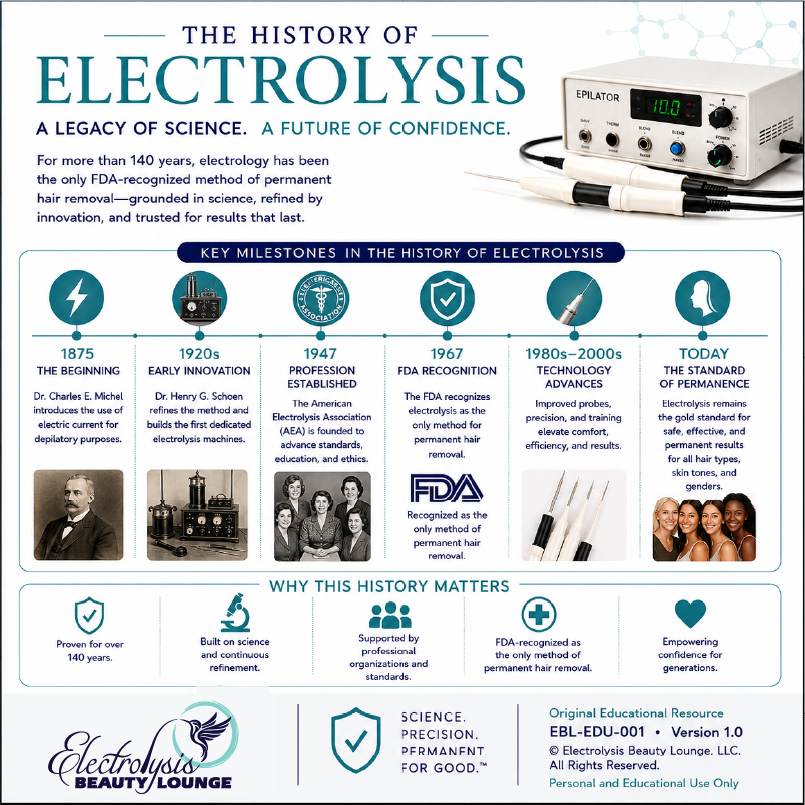
History of Electrolysis
EBL-EDU-001
-
![]()
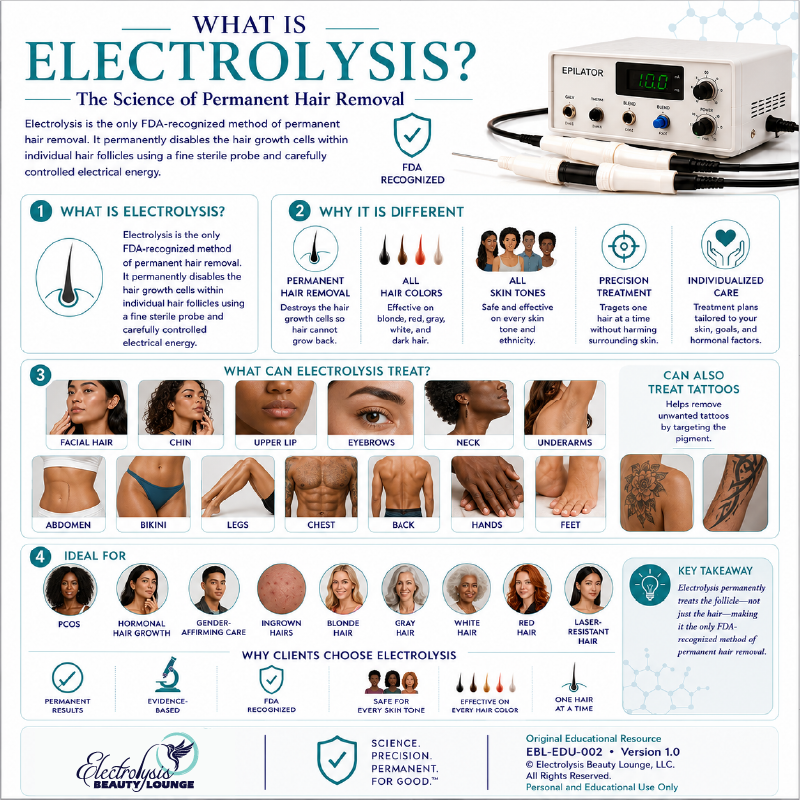
What is Electrolysis
EBL-EDU-002
-
![]()
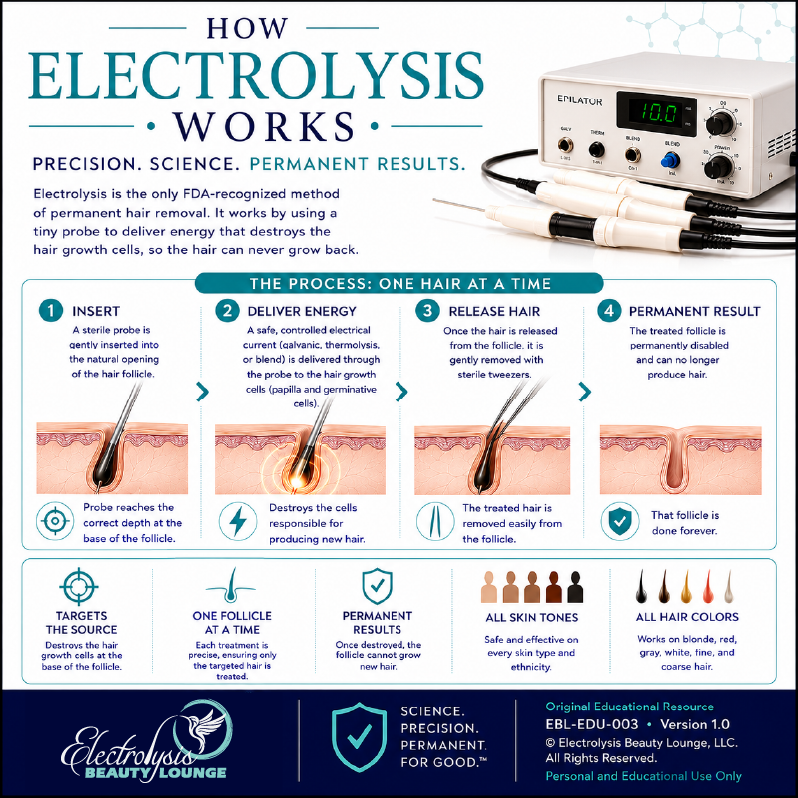
How Electrolysis Works
EBL-EDU-003
-
![]()
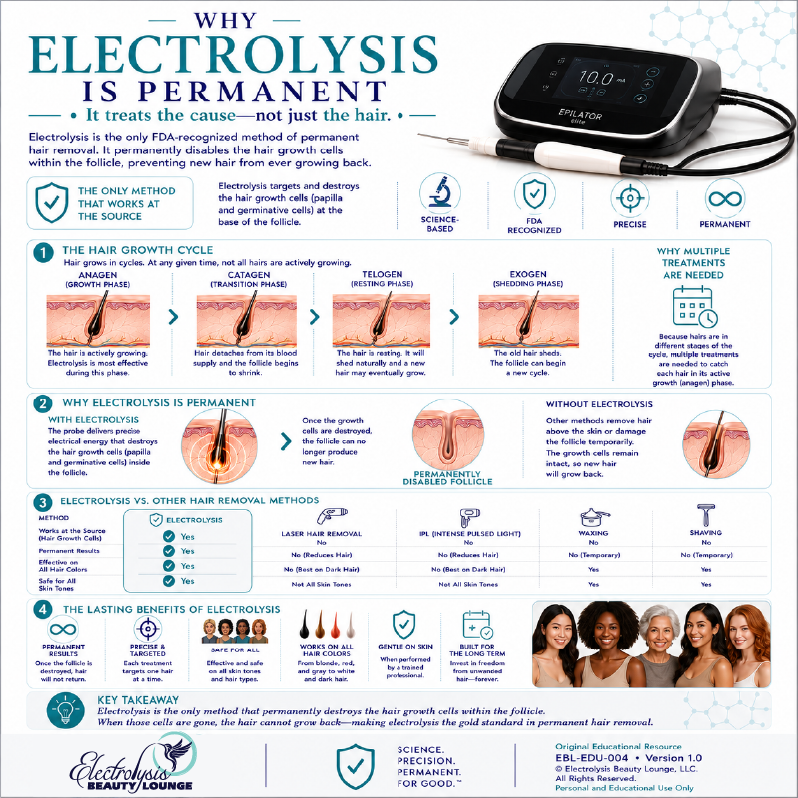
Why Electrolysis Permanent
EBL-EDU-004
Hair Biology \EDU-101-199/
-
![]()
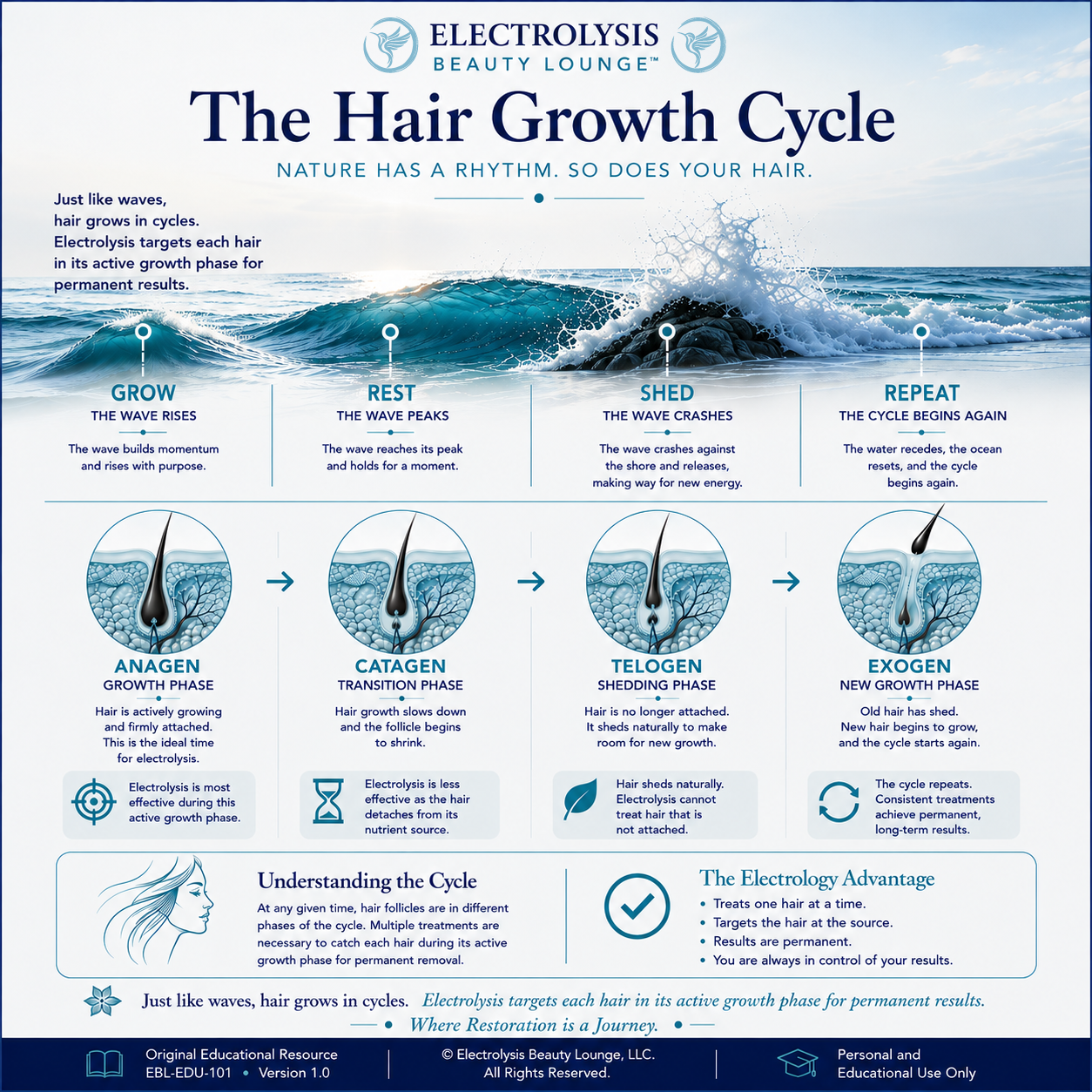
Hair Growth Cycle
EBL-EDU-101
-
![]()
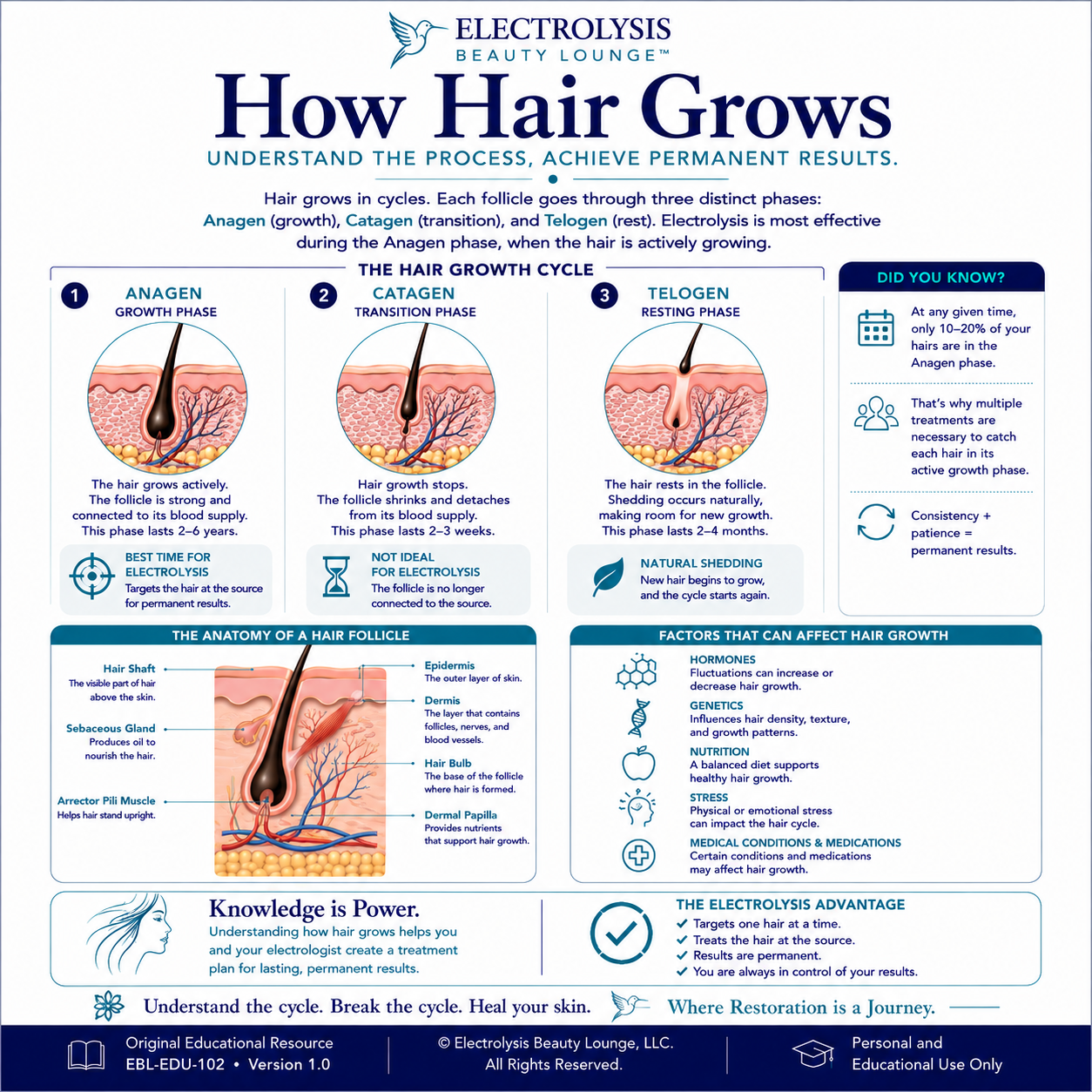
How Hair Grows
EBL-EDU-102
-
![]()
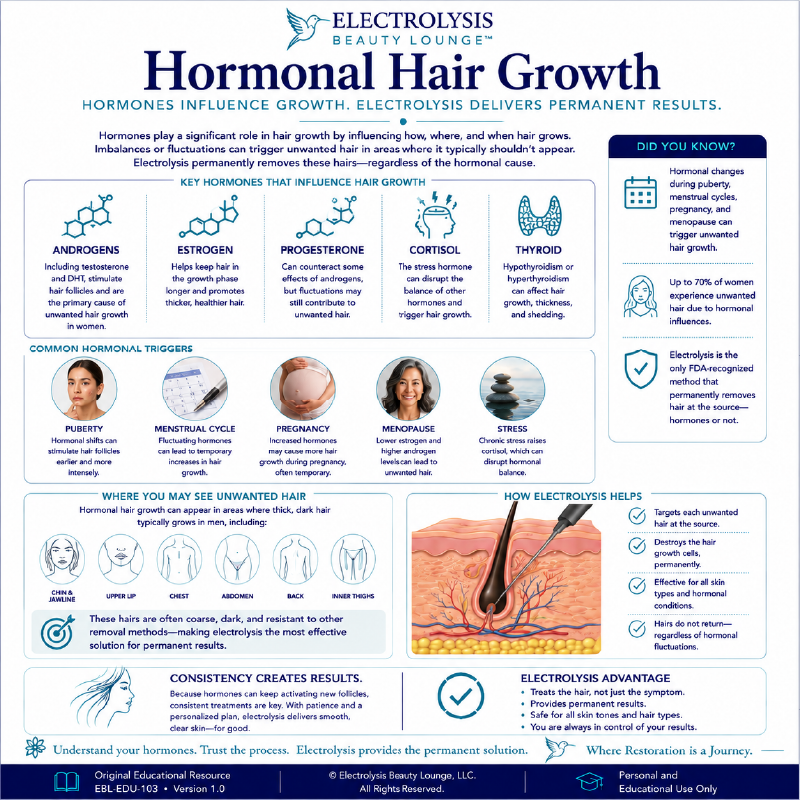
Hormonal Hair Growth
EBL-EDU-103
-
![]()
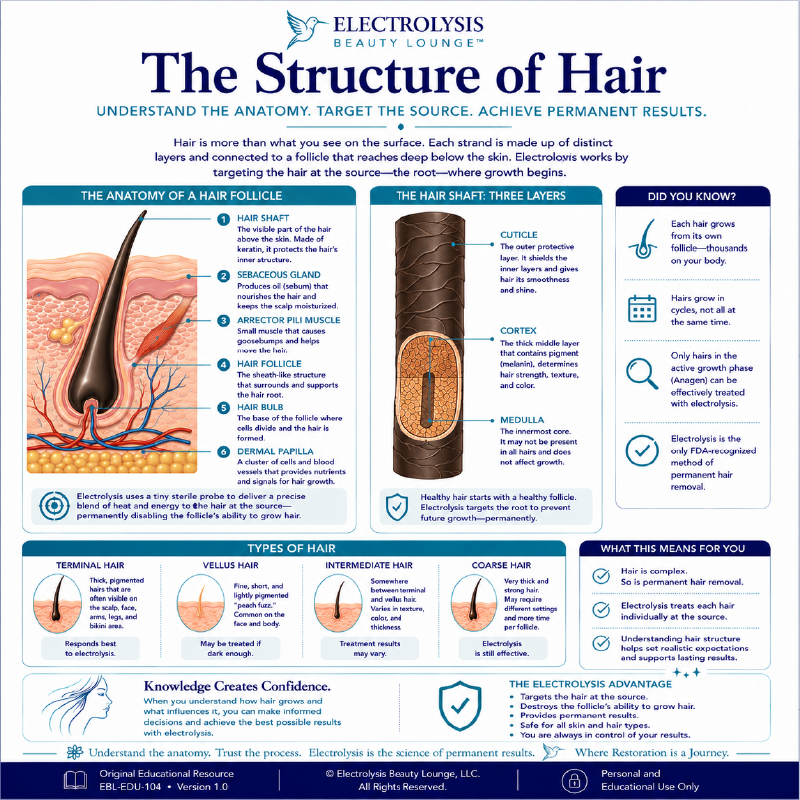
Hair Structure
EBL-EDU-104
Skin Health \EDU-401-499/
-
![]()
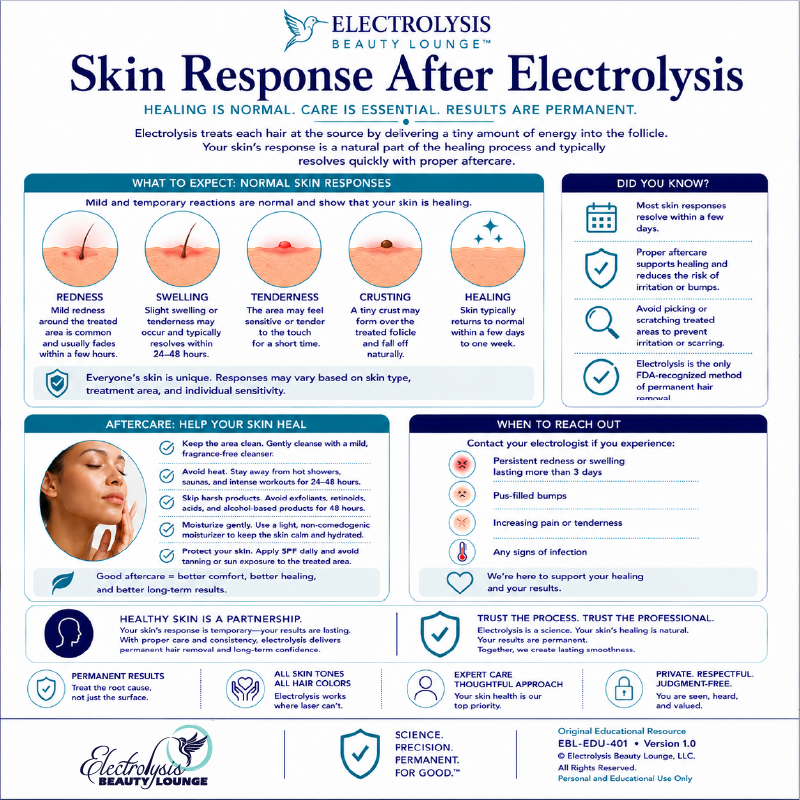
Skin Response
EBL-EDU-401
-
![]()
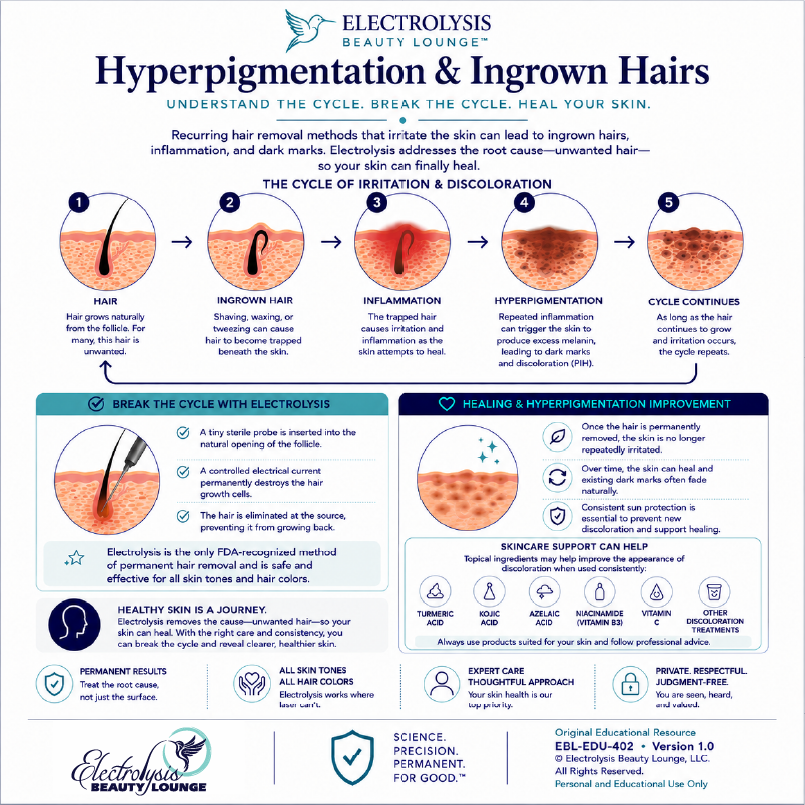
Hyperpigmentation
EBL-EDU-402
-
![]()
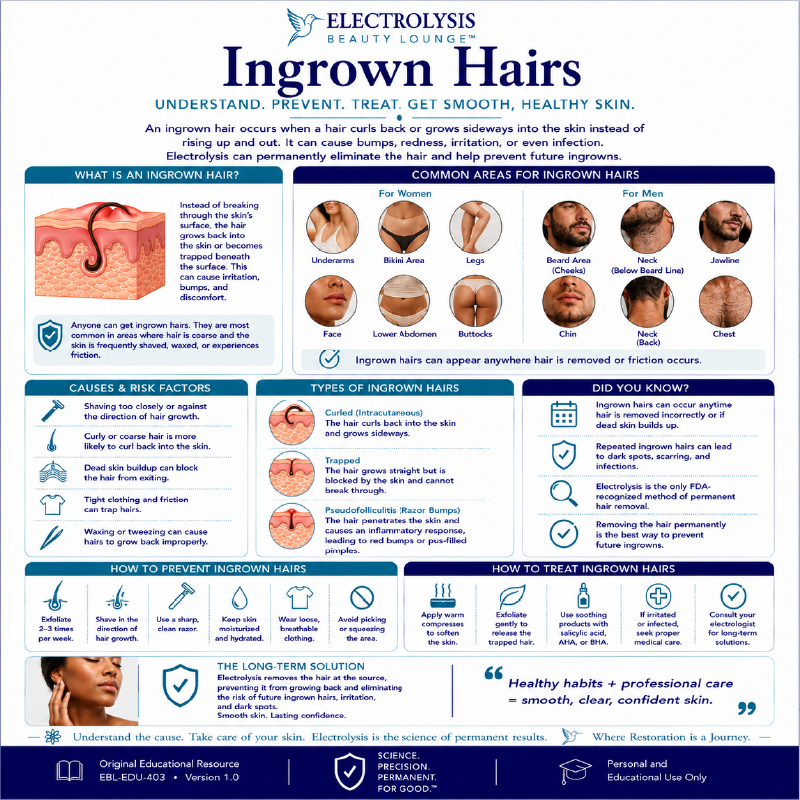
Ingrown Hairs
EBL-EDU-403
-
![]()
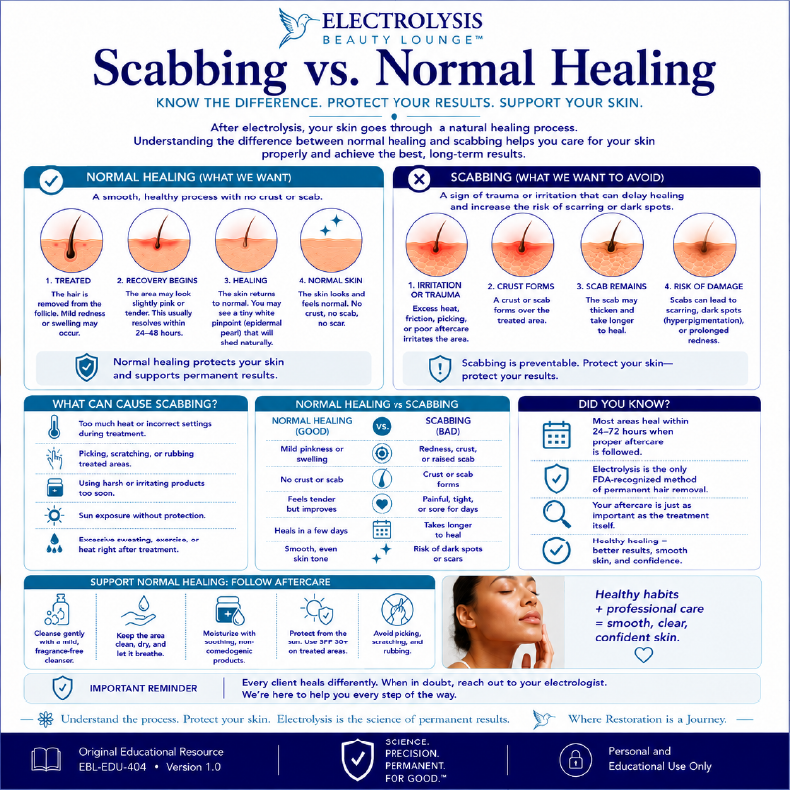
Scabbing vs. Normal Healing
EBL-EDU-404
Glossary of Terms
Permanent hair removal is a journey built on science, consistency, and informed decision-making. We hope this glossary helps you better understand the terminology, treatment process, and clinical principles behind electrolysis. As new research, technologies, and professional standards continue to evolve, this glossary will be updated to reflect the most current evidence-based information available.
Intellectual Property Notice
The educational infographics featured in this library are original works created by Electrolysis Beauty Lounge, LLC and are protected by applicable copyright and intellectual property laws. They are provided for personal and educational use and may not be reproduced, modified, distributed, published, or used for commercial purposes without prior written permission from Electrolysis Beauty Lounge.
© Electrolysis Beauty Lounge, LLC. All Rights Reserved.
-
Active Growth Phase (Anagen)
The active stage of the hair growth cycle during which a hair is firmly attached to the follicle and receives nutrients from the dermal papilla. Electrolysis is often most effective when treating hairs during this phase because the structures responsible for hair growth are fully developed.
Related Terms: Anagen • Hair Cycle • Dermal Papilla • Follicle
Aftercare
Instructions provided following an electrolysis treatment to promote healthy healing, minimize irritation, and reduce the risk of infection. Proper aftercare supports optimal skin recovery and treatment outcomes.
Related Terms: Healing • Inflammation • Post-Inflammatory Erythema • Skin Integrity
American Electrology Association (AEA)
The leading professional organization for electrologists in the United States. The AEA promotes education, professional standards, continuing education, research, and public awareness of permanent hair removal through electrolysis.
Related Terms: Certified Professional Electrologist • Continuing Education • Professional Standards
Anagen
The first and active phase of the hair growth cycle during which new hair is produced. Not every hair is in anagen at the same time, which is why multiple electrolysis treatments are necessary.
Related Terms: Hair Cycle • Catagen • Telogen • Active Growth Phase
Antiseptic
A substance applied to the skin to reduce microorganisms before treatment. Antiseptics help lower the risk of infection and are an important part of proper infection prevention protocols.
Related Terms: Disinfection • Sterilization • Infection Prevention
Apilus®
A computerized electrolysis system recognized for its advanced thermolysis technology, precision, and customizable treatment settings. Many modern electrologists use Apilus devices to improve client comfort and treatment efficiency.
Related Terms: Thermolysis • Blend • Galvanic • Electrolysis Device
Arrector Pili Muscle
A tiny muscle attached to each hair follicle that contracts when you're cold or frightened, causing the hair to stand upright and creating "goosebumps."
Related Terms: Follicle • Sebaceous Gland • Hair Anatomy
Ballet Probe®
A high-quality sterile electrolysis probe manufactured for professional electrology treatments. Ballet probes are available in various sizes and materials to accommodate different hair types and skin sensitivities.
Related Terms: Probe • Gold Probe • Insulated Probe • Stainless Steel Probe
Blend Method
One of the three recognized electrolysis modalities that combines galvanic current with thermolysis to permanently destroy the hair-producing cells within the follicle. Blend is especially effective for coarse, deep, or distorted follicles.
Related Terms: Electrolysis • Galvanic • Thermolysis • Distorted Follicle
Bloodborne Pathogens
Microorganisms carried in blood or other potentially infectious materials that can cause disease. Professional electrologists follow OSHA Standard Precautions to minimize the risk of exposure.
Related Terms: OSHA • Standard Precautions • Sterilization • Infection Prevention
Bulb (Hair Bulb)
The enlarged base of the hair located deep within the follicle. The hair bulb contains actively dividing cells responsible for producing the hair shaft.
Related Terms: Matrix Cells • Dermal Papilla • Hair Root
Bulge Region
An area of the hair follicle containing stem cells that play an important role in hair regeneration. Successful electrolysis targets the structures responsible for future hair growth within the follicle.
Related Terms: Follicle • Stem Cells • Permanent Hair Removal
Capillary
One of the smallest blood vessels in the body. Capillaries deliver oxygen and nutrients to tissues surrounding the hair follicle, including the dermal papilla.
Related Terms: Dermal Papilla • Blood Supply • Follicle
Catagen
The short transitional stage of the hair growth cycle between anagen and telogen. During catagen, the hair detaches from its blood supply and begins preparing to rest.
Related Terms: Hair Cycle • Anagen • Telogen
Certified Professional Electrologist (CPE)
A nationally recognized professional credential awarded by the American Electrology Association. Earning the CPE designation demonstrates advanced knowledge, commitment to continuing education, and dedication to maintaining high professional standards.
Related Terms: American Electrology Association • Continuing Education • Professional Standards
Clearance
The removal of all visible treatable hairs within a designated treatment area during an appointment. Achieving complete clearances early in a treatment plan often contributes to more efficient long-term progress.
Related Terms: Treatment Plan • Hair Cycle • Maintenance
Client Consultation
A comprehensive discussion conducted before treatment to review medical history, hair concerns, treatment goals, contraindications, expectations, and personalized treatment planning.
Related Terms: Health History • Contraindications • Treatment Plan
Coarse Hair
Hair with a thicker diameter than fine or vellus hair. Coarse hairs often require different treatment settings and may respond differently depending on the electrolysis modality used.
Related Terms: Terminal Hair • Vellus Hair • Hair Diameter
Contraindication
A medical condition, medication, or circumstance that may prevent or require modification of electrolysis treatment to ensure client safety.
Related Terms: Consultation • Medical Clearance • Health History
Continuing Education
Professional education completed after initial licensure or certification to maintain competency, stay informed about industry advances, and improve clinical skills.
Related Terms: Certified Professional Electrologist • American Electrology Association • Professional Standards
Cortex (Hair Cortex)
The thick middle layer of the hair shaft containing most of the hair's pigment and structural proteins. The cortex provides strength, flexibility, and contributes to hair color.
Related Terms: Hair Shaft • Cuticle • Medulla • Melanin
Current
The controlled electrical energy delivered through a sterile probe into the hair follicle during electrolysis. Depending on the modality, current produces heat, a chemical reaction, or both to permanently destroy the hair-producing cells.
Related Terms: Galvanic • Thermolysis • Blend • Probe
Cuticle (Hair Cuticle)
The outermost protective layer of the hair shaft composed of overlapping transparent cells. A healthy cuticle helps protect the inner layers of the hair.
Related Terms: Cortex • Medulla • Hair Shaft
Crust
A small, temporary protective covering that may develop as part of the skin's natural healing response following treatment. Crusts should be allowed to heal naturally and should never be picked.
Related Terms: Healing • Aftercare • Skin Integrity
Cross-Contamination
The transfer of microorganisms from one person, surface, instrument, or object to another. Proper hand hygiene, sterilization, and infection prevention protocols are essential to minimizing the risk of cross-contamination.
Related Terms: Sterilization • Standard Precautions • Infection Prevention • Disinfection
-
Depilation
The removal of hair at the skin's surface without affecting the hair follicle. Common methods include shaving and depilatory creams. Because the follicle remains intact, the hair will continue to grow.
Related Terms: Epilation • Shaving • Depilatory Cream • Follicle
Depilatory Cream
A chemical-based product that dissolves hair at the skin's surface. Depilatory creams provide temporary hair removal and may be used between electrolysis appointments, provided they do not irritate the skin.
Related Terms: Depilation • Shaving • Hair Removal Methods
Dermal Papilla
A small, specialized structure located at the base of the hair follicle that contains blood vessels and connective tissue. It supplies nutrients and growth signals necessary for hair production. Successfully disabling the hair-producing structures associated with the dermal papilla is essential for permanent hair removal.
Related Terms: Follicle • Hair Bulb • Matrix Cells • Capillary
Dermatitis
Inflammation of the skin that may cause redness, itching, swelling, or irritation. Clients experiencing active dermatitis should consult their healthcare provider before receiving electrolysis treatment in the affected area.
Related Terms: Inflammation • Contraindication • Skin Integrity
Dermis
The deeper layer of the skin located beneath the epidermis. The dermis contains hair follicles, sweat glands, sebaceous glands, nerves, and blood vessels.
Related Terms: Epidermis • Follicle • Sebaceous Gland
Disinfection
The process of eliminating most disease-causing microorganisms from surfaces and equipment using approved disinfectants. Unlike sterilization, disinfection does not destroy all bacterial spores.
Related Terms: Sterilization • Antiseptic • Infection Prevention • Cross-Contamination
Distorted Follicle
A hair follicle whose natural shape has changed due to repeated tweezing, waxing, ingrown hairs, scarring, or previous hair removal methods. Distorted follicles may require specialized electrolysis techniques or the Blend modality for optimal treatment.
Related Terms: Blend Method • Follicle • Tweezing • Ingrown Hair
Electrolysis
The only FDA-recognized method of permanent hair removal. Electrolysis permanently destroys the hair-producing cells within each individual follicle using a fine, sterile probe and carefully controlled electrical current. It is effective for all skin tones, all hair colors, and nearly every area of the body.
Related Terms: Permanent Hair Removal • Probe • Follicle • Thermolysis • Blend • Galvanic
Electrolysis Device
A professional instrument used to generate and control the electrical current delivered during electrolysis treatments. Modern computerized systems allow electrologists to customize treatment settings based on hair type, skin characteristics, and client comfort.
Related Terms: Apilus® • Current • Thermolysis
Electrologist
A trained and licensed professional who performs electrolysis treatments. Electrologists evaluate hair growth patterns, develop individualized treatment plans, and safely perform permanent hair removal using evidence-based techniques.
Related Terms: Certified Professional Electrologist • Consultation • Treatment Plan
Electrology
The professional practice and science of permanently removing unwanted hair through electrolysis. Electrology encompasses treatment techniques, infection prevention, client education, and ongoing professional development.
Related Terms: Electrolysis • Electrologist • Permanent Hair Removal
Edema
Temporary swelling caused by the body's natural inflammatory response following treatment. Mild edema is a normal and expected response for some clients and typically resolves within a short period.
Related Terms: Inflammation • Erythema • Aftercare
Epidermis
The outermost protective layer of the skin. During electrolysis, the probe is inserted into the natural follicular opening without puncturing the epidermis.
Related Terms: Dermis • Follicle • Probe
Epilation
The removal of hair from the follicle rather than simply cutting it at the skin's surface. Waxing, tweezing, threading, sugaring, epilating devices, and electrolysis are all forms of epilation; however, only electrolysis permanently destroys the follicle.
Related Terms: Depilation • Electrolysis • Waxing • Tweezing
Epilator (Electric Epilator)
A handheld device that mechanically removes multiple hairs from their follicles using rotating tweezers or discs. While longer-lasting than shaving, results are temporary because the follicles remain capable of producing new hair.
Related Terms: Epilation • Tweezing • Hair Removal Methods
Erythema
Temporary redness of the skin resulting from increased blood flow following treatment. Mild erythema is a normal response to electrolysis and typically subsides within several hours.
Related Terms: Edema • Inflammation • Aftercare • Post-Inflammatory Erythema
Estrogen
A primary sex hormone that influences numerous functions throughout the body, including hair growth patterns. Changes in estrogen levels during puberty, pregnancy, postpartum, or menopause may contribute to changes in facial or body hair.
Related Terms: Hormonal Hair Growth • Menopause • PMOS (formerly PCOS)
FDA-Recognized Permanent Hair Removal
Electrolysis is recognized by the U.S. Food and Drug Administration (FDA) as the only method of permanent hair removal. This distinguishes electrolysis from methods marketed as permanent hair reduction.
Related Terms: Permanent Hair Removal • Permanent Hair Reduction • Electrolysis
Fine Hair
Hair with a small diameter that may be lightly or darkly pigmented. Fine hairs often require different treatment settings than coarse terminal hairs.
Related Terms: Terminal Hair • Vellus Hair • Hair Diameter
First Clearance
The first appointment—or series of appointments—in which every visible treatable hair within a treatment area has been removed. Achieving first clearance early in a treatment plan often leads to more predictable long-term progress.
Related Terms: Clearance • Hair Cycle • Treatment Plan
Fitzpatrick Skin Type
A widely used skin classification system that categorizes skin based on its response to ultraviolet (UV) exposure. The Fitzpatrick Scale ranges from Type I (very fair skin that burns easily) to Type VI (deeply pigmented skin that rarely burns). Understanding skin type helps guide treatment planning and aftercare recommendations.
Related Terms: Melanin • Hyperpigmentation • Skin Assessment
Flash Thermolysis
A thermolysis technique that delivers high-frequency current over a very short period of time. Modern computerized electrolysis systems use flash thermolysis to increase efficiency while maintaining precision and client comfort.
Related Terms: Thermolysis • Microflash • Picoflash • Apilus®
Follicle
A tiny tube-like structure within the skin responsible for producing hair. Electrolysis permanently treats the follicle—not the hair itself—by destroying the cells responsible for future hair growth.
Related Terms: Hair Bulb • Dermal Papilla • Matrix Cells • Permanent Hair Removal
Follicular Opening
The natural opening at the skin's surface through which the hair emerges. During electrolysis, the sterile probe is gently inserted into this opening without puncturing the skin.
Related Terms: Probe • Epidermis • Follicle
Follicular Papilla
Another term commonly used to describe the Dermal Papilla, the specialized structure that supplies nutrients and growth signals to the developing hair.
-
Galvanic
One of the three recognized electrolysis modalities that uses direct current to create a natural chemical reaction within the hair follicle. This reaction produces sodium hydroxide (lye), which permanently destroys the hair-producing cells.
Related Terms: Blend Method • Thermolysis • Electrolysis • Lye
Gender-Affirming Care
Healthcare and personal care services that affirm and support an individual's gender identity. At Electrolysis Beauty Lounge, treatments are provided with respect, cultural humility, and inclusive communication to support every client's goals in a safe, welcoming environment.
Related Terms: Personalized Care • Consultation • Hormonal Hair Growth
Gold Probe
A sterile electrolysis probe coated with gold to reduce the likelihood of skin sensitivity or allergic reactions in clients with certain metal sensitivities.
Related Terms: Probe • Stainless Steel Probe • Insulated Probe
Hair Bulb
The enlarged base of the hair located deep within the follicle where actively dividing cells produce new hair.
Related Terms: Dermal Papilla • Matrix Cells • Follicle
Hair Cycle
The natural process through which every hair grows, transitions, rests, and sheds. Because each follicle operates independently, hairs are always in different stages of the cycle, making multiple electrolysis treatments necessary for permanent hair removal.
Related Terms: Anagen • Catagen • Telogen
Hair Density
The number of hair follicles located within a specific area of skin. Areas with higher hair density generally require longer treatment times and additional appointments.
Related Terms: Treatment Plan • Terminal Hair • Vellus Hair
Hair Diameter
The thickness of an individual hair shaft. Hair diameter influences treatment settings, probe selection, and treatment timing.
Related Terms: Fine Hair • Coarse Hair • Probe Size
Hair Follicle
See Follicle.
Related Terms: Follicle • Hair Bulb • Dermal Papilla
Hair Growth
The continuous biological process through which hair develops from specialized cells within the follicle. Hair growth is influenced by genetics, hormones, age, medications, and overall health.
Related Terms: Hair Cycle • Hormonal Hair Growth • Follicle
Hair Removal
The process of eliminating unwanted hair using temporary or permanent methods. Methods include shaving, waxing, sugaring, threading, laser hair reduction, and electrolysis.
Related Terms: Permanent Hair Removal • Hair Reduction • Epilation • Depilation
Hair Reduction
A decrease in the amount, thickness, or visibility of hair over time. Hair reduction differs from permanent hair removal because treated follicles may continue producing hair.
Related Terms: Laser Hair Reduction • Permanent Hair Reduction • Electrolysis
Hair Root
The portion of the hair located beneath the skin within the follicle.
Related Terms: Hair Bulb • Follicle • Hair Shaft
Hair Shaft
The visible portion of the hair extending above the skin's surface. Electrolysis treats the follicle beneath the skin rather than the visible hair shaft.
Related Terms: Cuticle • Cortex • Medulla
Healing
The body's natural process of repairing tissue following treatment. Mild redness, tenderness, or swelling may occur after electrolysis and typically resolve within a short period when proper aftercare is followed.
Related Terms: Aftercare • Inflammation • Skin Integrity
Health History
A confidential record of a client's medical conditions, medications, allergies, previous hair removal methods, and other health information used to develop a safe, individualized treatment plan.
Related Terms: Consultation • Contraindications • Medical Clearance
High-Frequency Current
The electrical energy used during thermolysis to generate heat within the follicle and permanently destroy hair-producing cells.
Related Terms: Thermolysis • Flash Thermolysis • Current
Hirsutism
Excess terminal hair growth in women or individuals assigned female at birth in areas where hair growth is typically associated with male hormonal patterns, such as the face, chest, or abdomen. Hirsutism is often associated with hormonal conditions, medications, or genetic factors.
Related Terms: Hormonal Hair Growth • PMOS (formerly PCOS) • Hypertrichosis
Hormonal Hair Growth
Hair growth influenced by changes in hormone levels, including puberty, pregnancy, menopause, endocrine disorders, medications, or conditions such as Polycystic Ovary Syndrome (PCOS). Electrolysis permanently removes existing hairs but cannot prevent the development of new hormonally stimulated follicles in the future.
Related Terms: Hirsutism • Menopause • Testosterone • Estrogen • PMOS (formerly PCOS)
Hyperpigmentation
Temporary darkening of the skin caused by increased melanin production following inflammation or irritation. Proper aftercare and sun protection help reduce the likelihood of post-inflammatory hyperpigmentation.
Related Terms: Melanin • Fitzpatrick Skin Type • Inflammation
Hypertrichosis
Excessive hair growth that occurs outside the typical patterns expected for a person's age, sex, or ethnicity. Unlike hirsutism, hypertrichosis is not necessarily caused by hormones and may be congenital or acquired.
Related Terms: Hirsutism • Hormonal Hair Growth • Terminal Hair
Hypopigmentation
A temporary or permanent lightening of the skin resulting from decreased melanin production. Although uncommon, hypopigmentation may occur following skin injury or inflammation.
Related Terms: Hyperpigmentation • Melanin • Skin Healing
Infection Prevention
The collection of procedures and protocols designed to reduce the risk of transmitting microorganisms during treatment. These practices include proper hand hygiene, sterilization, single-use disposable supplies, and adherence to Standard Precautions.
Related Terms: Sterilization • Disinfection • OSHA • Standard Precautions
Inflammation
The body's natural response to injury or irritation. Mild inflammation following electrolysis is a normal part of the healing process and typically resolves quickly with proper aftercare.
Related Terms: Healing • Erythema • Edema
Ingrown Hair
A hair that grows back into or beneath the skin rather than emerging through the follicular opening. Ingrown hairs may cause redness, tenderness, inflammation, or discoloration. Electrolysis can permanently eliminate individual ingrown hairs by treating the responsible follicle.
Related Terms: Follicle • Distorted Follicle • Inflammation
Inner Root Sheath
The inner lining of the hair follicle that surrounds and supports the developing hair shaft as it grows toward the skin's surface.
Related Terms: Outer Root Sheath • Follicle • Hair Shaft
Insertions
The gentle placement of the sterile probe into the natural opening of the hair follicle during electrolysis. Proper insertions follow the natural angle of hair growth and do not puncture the skin.
Related Terms: Probe • Follicular Opening • Electrologist
Insulated Probe
A specialized electrolysis probe coated with an insulating material that concentrates energy delivery near the treatment area while helping minimize heat transfer to surrounding tissue. Insulated probes may be beneficial in certain treatment areas or for clients with sensitive skin.
Related Terms: Gold Probe • Stainless Steel Probe • Probe
Insulin Resistance
A metabolic condition in which the body's cells become less responsive to insulin. Insulin resistance is commonly associated with Polycystic Ovary Syndrome (PCOS) and may contribute to increased androgen production and unwanted hair growth.
Related Terms: PMOS (formerly PCOS) • Hirsutism • Hormonal Hair Growth
Isopropyl Alcohol
A commonly used antiseptic solution used to cleanse the skin before treatment. Isopropyl alcohol helps reduce microorganisms on the skin's surface but does not sterilize instruments.
Related Terms: Antiseptic • Disinfection • Infection Prevention
-
Joule
A unit of energy used in physics. While electrologists do not typically adjust treatments by joules, the concept helps describe the amount of energy delivered during various hair removal technologies.
Related Terms: Current • Thermolysis • Electrolysis Device
Keratin
A strong structural protein that forms the hair shaft, nails, and outer layer of the skin. Hair is composed primarily of keratin, which gives it strength and flexibility.
Related Terms: Hair Shaft • Cuticle • Cortex
Laser Hair Reduction
A hair removal method that uses concentrated light energy to damage hair follicles and reduce future hair growth. Laser is FDA-cleared for permanent hair reduction, not permanent hair removal, and is generally most effective on dark hair with lighter skin tones. Electrolysis remains the only FDA-recognized method of permanent hair removal.
Related Terms: Permanent Hair Reduction • Electrolysis • Melanin • Hair Reduction
Laser Treatment Interval
The recommended amount of time between laser hair reduction sessions, allowing new hairs to enter an active growth phase before treatment. Treatment intervals vary depending on the body area and individual hair growth patterns.
Related Terms: Hair Cycle • Treatment Interval • Laser Hair Reduction
Lanugo Hair
The fine, soft hair that develops on a fetus during pregnancy. Lanugo is normally shed before or shortly after birth and is not the type of hair treated with electrolysis.
Related Terms: Vellus Hair • Terminal Hair • Hair Growth
Lateral Follicle Distortion
A change in the natural direction or angle of a hair follicle caused by repeated tweezing, waxing, trauma, or scarring. Distorted follicles often require advanced insertion techniques and careful treatment planning.
Related Terms: Distorted Follicle • Blend Method • Insertions
Lye
The common name for sodium hydroxide, the chemical produced during galvanic electrolysis. Lye permanently destroys the hair-producing cells within the follicle.
Related Terms: Galvanic • Blend Method • Electrolysis
-
Magnification
The use of specialized optical equipment to enlarge the treatment area, allowing the electrologist to visualize individual hairs and follicular openings with greater precision.
Related Terms: Surgical Loupes • Follicular Opening • Precision
Maintenance Treatments
Appointments scheduled after significant hair clearance has been achieved to treat newly emerging hairs or hairs stimulated by future hormonal changes. As treatment progresses, maintenance appointments typically become less frequent.
Related Terms: Hair Cycle • Treatment Plan • Touch-Up • Hormonal Hair Growth
Matrix Cells
Specialized cells located within the hair bulb that divide rapidly to produce the hair shaft. Electrolysis permanently destroys these reproductive cells to prevent future hair growth.
Related Terms: Hair Bulb • Dermal Papilla • Follicle
Medical Clearance
Written approval from a licensed healthcare provider indicating that electrolysis treatment is appropriate for a client with certain medical conditions or circumstances.
Related Terms: Consultation • Contraindication • Health History
Medulla
The innermost layer of the hair shaft. Some hairs contain a well-defined medulla, while others—particularly finer hairs—may have little or none.
Related Terms: Cortex • Cuticle • Hair Shaft
Melanin
The natural pigment responsible for the color of skin, hair, and eyes. Laser hair reduction relies on melanin to absorb light energy, whereas electrolysis permanently treats follicles regardless of hair or skin color.
Related Terms: Laser Hair Reduction • Hyperpigmentation • Fitzpatrick Skin Type
Menopause
The natural stage of life marking the end of menstrual cycles, diagnosed after twelve consecutive months without a menstrual period. Hormonal changes during menopause may contribute to increased facial hair growth, making electrolysis a common long-term treatment choice.
Related Terms: Perimenopause • Hormonal Hair Growth • Estrogen • Testosterone
Microflash Thermolysis
An advanced thermolysis technique that delivers high-frequency current in extremely short durations, allowing efficient treatment while maximizing client comfort.
Related Terms: Flash Thermolysis • Picoflash • Thermolysis
Moisturizer
A skincare product used to maintain hydration and support the skin's natural protective barrier. Following your electrologist's aftercare recommendations regarding moisturizers can promote healthy healing.
Related Terms: Aftercare • Healing • Skin Barrier
Needle
A term sometimes mistakenly used to describe the instrument used during electrolysis. In reality, electrologists use a sterile probe, not a needle. The probe gently follows the natural follicle opening and does not inject, puncture, or cut the skin.
Related Terms: Probe • Follicular Opening • Insertions
Outer Root Sheath
The outer protective layer of the hair follicle that surrounds the developing hair and supports follicular structure.
Related Terms: Inner Root Sheath • Follicle • Hair Anatomy
Permanent Hair Reduction
A long-term decrease in the number of hairs regrowing after treatment. This term is commonly associated with laser hair removal because some follicles may recover and produce hair again over time.
Related Terms: Laser Hair Reduction • Permanent Hair Removal • Hair Reduction
Permanent Hair Removal
The permanent elimination of a hair's ability to regrow after successful treatment. Electrolysis is recognized by the U.S. Food and Drug Administration (FDA) as the only method of permanent hair removal.
Related Terms: Electrolysis • Permanent Hair Reduction • Follicle
Perimenopause
The transitional stage leading up to menopause during which hormone levels fluctuate. These hormonal changes may trigger increased facial hair growth or changes in existing hair patterns.
Related Terms: Menopause • Hormonal Hair Growth • Estrogen
Personalized Treatment Plan
A customized schedule of electrolysis treatments developed according to a client's hair growth patterns, treatment goals, medical history, and lifestyle. Treatment plans are regularly adjusted as progress is achieved.
Related Terms: Consultation • First Clearance • Maintenance Treatments
Picoflash Thermolysis
One of the fastest thermolysis technologies available, delivering energy in thousandths of a second for highly precise treatment. Picoflash technology is available on many modern computerized electrolysis systems.
Related Terms: Flash Thermolysis • Microflash • Apilus®
Polycystic Ovary Syndrome (PCOS) (see Polyendocrine Metabolic Ovarian Syndrome (PMOS))
Polyendocrine Metabolic Ovarian Syndrome (PMOS)
An emerging term proposed by some researchers and healthcare professionals to better describe the complex hormonal, metabolic, and reproductive nature of the condition long known as Polycystic Ovary Syndrome (PCOS). While PCOS remains the officially recognized medical diagnosis used by major healthcare organizations, the term PMOS emphasizes that the condition involves far more than the ovaries, affecting multiple endocrine and metabolic systems throughout the body.
Individuals with PMOS/PCOS may experience symptoms such as excess facial or body hair (hirsutism), irregular menstrual cycles, acne, infertility, insulin resistance, weight management challenges, and other hormonal imbalances. Electrolysis permanently removes existing unwanted hair by treating individual follicles; however, it cannot prevent new hair growth that may develop as a result of ongoing hormonal changes.
Formerly Known As: Polycystic Ovary Syndrome (PCOS)
Related Terms: Hirsutism • Hormonal Hair Growth • Insulin Resistance • Testosterone • Endocrine System
Post-Inflammatory Erythema (PIE)
Temporary pink or red discoloration that remains after inflammation has resolved. PIE is a normal healing response in some individuals and typically fades over time.
Related Terms: Erythema • Healing • Inflammation
Post-Inflammatory Hyperpigmentation (PIH)
Temporary darkening of the skin following inflammation or injury. Individuals with higher levels of melanin may be more susceptible to PIH. Following proper aftercare and sun protection recommendations helps reduce the risk.
Related Terms: Hyperpigmentation • Melanin • Fitzpatrick Skin Type
Precision Insertion
The skilled placement of a sterile probe into the natural follicular opening at the same angle as the hair grows. Accurate insertions improve treatment effectiveness while maximizing client comfort.
Related Terms: Insertions • Probe • Follicular Opening
Probe
A fine, sterile, solid filament used during electrolysis to deliver electrical current directly into the hair follicle. Unlike a needle, a probe does not inject substances or puncture the skin.
Related Terms: Sterile Probe • Gold Probe • Insulated Probe • Stainless Steel Probe
Probe Size
The diameter of an electrolysis probe selected according to the size and characteristics of the hair being treated. Proper probe selection contributes to treatment efficiency, comfort, and precision.
Related Terms: Probe • Hair Diameter • Terminal Hair
Professional Standards
Ethical, educational, and clinical guidelines that help ensure safe, effective, and consistent electrolysis care. Professional standards are supported through licensure, continuing education, and organizations such as the American Electrology Association.
Related Terms: AEA • Certified Professional Electrologist • Continuing Education
-
Regrowth
The appearance of new visible hair following treatment. Regrowth does not necessarily indicate that a previously treated follicle has recovered; more commonly, it reflects hairs that were dormant or in different stages of the natural hair growth cycle at the time of earlier treatments.
Related Terms: Hair Cycle • Anagen • Treatment Plan • First Clearance
Root Sheath
The protective tissue that surrounds the hair root within the follicle. The root sheath helps guide and support the developing hair as it grows toward the skin's surface.
Related Terms: Inner Root Sheath • Outer Root Sheath • Follicle
Scab
A protective covering formed by dried blood or serum over a healing area of skin. Small scabs may occasionally develop following electrolysis, particularly after treating coarse hairs. They should be allowed to heal naturally without picking or scratching.
Related Terms: Crust • Healing • Aftercare • Skin Integrity
Sebaceous Gland
A small oil-producing gland attached to most hair follicles. It secretes sebum, a natural oil that helps lubricate and protect both the skin and hair.
Related Terms: Follicle • Arrector Pili Muscle • Sebum
Sebum
The natural oil produced by sebaceous glands that helps maintain the skin's protective barrier and prevents excessive dryness.
Related Terms: Sebaceous Gland • Skin Barrier • Hair Follicle
Shaving
A temporary method of hair removal that cuts the hair at the skin's surface without affecting the follicle. Shaving does not cause hair to grow back thicker, darker, or faster—a common misconception.
Related Terms: Depilation • Hair Removal Methods • Follicle
Skin Barrier
The outer protective function of the skin that helps prevent moisture loss while defending against bacteria, irritants, and environmental damage. Maintaining a healthy skin barrier supports optimal healing after electrolysis.
Related Terms: Epidermis • Healing • Aftercare
Skin Integrity
The overall health and condition of the skin. Healthy skin integrity is important for safe electrolysis treatments and optimal healing.
Related Terms: Healing • Aftercare • Inflammation
Sodium Hydroxide
A naturally occurring chemical (commonly called lye) produced during galvanic electrolysis. Sodium hydroxide destroys the hair-producing cells responsible for future hair growth.
Related Terms: Lye • Galvanic • Blend Method
Standard Precautions
A set of infection prevention practices established to reduce the risk of transmitting infectious diseases. Standard Precautions include proper hand hygiene, the use of personal protective equipment when appropriate, sterilization of reusable instruments, and safe handling of all treatment materials.
Related Terms: OSHA • Sterilization • Infection Prevention • Bloodborne Pathogens
Stainless Steel Probe
A sterile electrolysis probe made from surgical-grade stainless steel. Stainless steel probes are commonly used for most electrolysis treatments due to their durability, precision, and excellent conductivity.
Related Terms: Probe • Gold Probe • Insulated Probe
Stem Cells (Hair Follicle Stem Cells)
Specialized cells located primarily within the bulge region of the hair follicle. These cells contribute to the regeneration of new hair and are among the structures targeted during successful electrolysis treatment.
Related Terms: Bulge Region • Matrix Cells • Permanent Hair Removal
Sterile Probe
A new, individually packaged probe that has been sterilized before use. A sterile probe is opened immediately before treatment and is used for only one client to help maintain the highest standards of infection prevention.
Related Terms: Probe • Sterilization • Infection Prevention
Sterilization
The complete elimination of all microorganisms, including bacteria, viruses, fungi, and bacterial spores, from reusable instruments through approved sterilization methods. Sterilization is a critical component of safe electrology practice.
Related Terms: Disinfection • Sterilization Indicator • Standard Precautions
Sterilization Indicator
A chemical or biological indicator used to verify that sterilization equipment has successfully completed the sterilization process according to established standards.
Related Terms: Sterilization • Infection Prevention • OSHA
Sugaring
A temporary epilation method that removes hair from the follicle using a paste made primarily of sugar, water, and lemon juice. Like waxing, sugaring removes the hair but does not permanently destroy the follicle.
Related Terms: Waxing • Epilation • Hair Removal Methods
Surgical Loupes
Magnifying eyewear worn by many electrologists to enhance visibility and improve treatment precision. Surgical loupes help identify individual hairs and follicular openings while supporting accurate insertions.
Related Terms: Magnification • Precision Insertion • Follicular Opening
-
Telogen
The resting phase of the hair growth cycle. During telogen, the hair remains in the follicle without active growth before eventually shedding and making way for a new anagen hair.
Related Terms: Hair Cycle • Anagen • Catagen
Terminal Hair
Thick, coarse, fully pigmented hair commonly found on the scalp, eyebrows, eyelashes, beard area, underarms, legs, and pubic region. Hormonal changes may also stimulate terminal hair growth on the face or body.
Related Terms: Vellus Hair • Hair Diameter • Hirsutism
Testosterone
An androgen hormone present in all people but generally found in higher concentrations in males. Increased androgen activity may stimulate the development of terminal facial and body hair in susceptible individuals.
Related Terms: Hormonal Hair Growth • Hirsutism • Menopause • Polyendocrine Metabolic Ovarian Syndrome (PMOS)
Thermolysis
One of the three recognized electrolysis modalities that uses high-frequency alternating current to generate heat within the follicle. The heat permanently destroys the hair-producing cells responsible for future hair growth. Thermolysis is the most commonly performed electrolysis modality today due to its speed and effectiveness.
Related Terms: Galvanic • Blend Method • Flash Thermolysis • Microflash Thermolysis • Picoflash Thermolysis
Threading
A temporary hair removal technique in which twisted cotton thread is used to remove hairs from the follicle. Threading is commonly performed on the eyebrows, upper lip, chin, and other facial areas but does not permanently prevent hair regrowth.
Related Terms: Tweezing • Sugaring • Waxing • Epilation
Thyroid Disorders
Conditions affecting the thyroid gland that may influence metabolism, hormone production, and hair growth patterns. Both hypothyroidism and hyperthyroidism can contribute to changes in facial or body hair, making consultation and treatment planning especially important.
Related Terms: Hormonal Hair Growth • Consultation • Medical Clearance
Touch-Up Treatment
An occasional electrolysis appointment scheduled after the primary treatment plan has been completed to address newly emerging hairs, often resulting from hormonal changes or previously dormant follicles.
Related Terms: Maintenance Treatments • Regrowth • Hair Cycle
Treatment Interval
The recommended amount of time between electrolysis appointments based on the hair growth cycle, treatment area, and individual treatment plan. Appropriate scheduling helps maximize treatment efficiency and long-term progress.
Related Terms: Hair Cycle • Treatment Plan • First Clearance
Treatment Plan
A personalized schedule of electrolysis treatments developed according to a client's hair growth patterns, treatment goals, medical history, lifestyle, and treatment progress. Treatment plans evolve over time as hair density decreases and clearances are achieved.
Related Terms: Consultation • First Clearance • Maintenance Treatments • Treatment Interval
Tweezing
A temporary epilation method that removes individual hairs from the follicle using tweezers. Frequent tweezing may distort follicles over time, making electrolysis treatments more technically challenging.
Related Terms: Epilation • Distorted Follicle • Threading • Waxing
Unwanted Hair
Hair that an individual chooses to remove for cosmetic, personal, cultural, gender-affirming, or medical reasons. Because unwanted hair is subjective, treatment goals are personalized to each client's preferences and needs.
Related Terms: Consultation • Treatment Plan • Personalized Care
Vellus Hair
Fine, soft, lightly pigmented hair that covers much of the body. Vellus hairs are often called "peach fuzz" and differ from terminal hairs in both thickness and pigment.
Related Terms: Terminal Hair • Hair Diameter • Hair Cycle
Virtual Consultation
A consultation conducted remotely using secure video conferencing or educational resources before an in-person appointment. Virtual consultations allow clients to learn about electrolysis, discuss treatment goals, and receive preliminary guidance before beginning treatment.
Related Terms: Consultation • Treatment Plan • Client Education
Waxing
A temporary epilation method that removes hair from the follicle by applying and removing warm or cold wax. Although waxing removes the entire hair, it does not permanently destroy the follicle, allowing hair to regrow over time.
Related Terms: Sugaring • Threading • Tweezing • Epilation
Wound Healing
The body's natural process of repairing skin following injury or irritation. Electrolysis creates a controlled treatment response within the follicle, after which the skin begins its normal healing process. Following recommended aftercare supports healthy recovery and helps minimize unwanted skin reactions.
Related Terms: Healing • Aftercare • Skin Integrity • Inflammation
Workplace Safety
The policies, procedures, and infection prevention practices designed to protect both clients and practitioners during treatment. Workplace safety includes proper sterilization, equipment maintenance, hand hygiene, sharps disposal, and adherence to OSHA standards.
Related Terms: OSHA • Standard Precautions • Sterilization • Bloodborne Pathogens
World Health Organization (WHO)
The specialized agency of the United Nations responsible for international public health. While the WHO does not establish standards specific to electrology, its guidance on infection prevention, hygiene, and healthcare safety informs many best practices used throughout the healthcare industry.
Related Terms: Infection Prevention • Sterilization • Public Health
Xanthoma
A yellowish deposit of cholesterol-rich material that forms beneath the skin. Although uncommon in electrology practice, xanthomas should not be treated with electrolysis and should instead be evaluated by a healthcare provider.
Related Terms: Contraindication • Medical Clearance • Skin Assessment
Xerosis
The medical term for abnormally dry skin. Clients with xerosis may benefit from additional skin hydration before and after treatment to support comfort and healthy healing.
Related Terms: Skin Barrier • Moisturizer • Aftercare
Yeast (Cutaneous Yeast Infection)
A fungal infection affecting the skin that may cause redness, irritation, itching, or scaling. Areas with active skin infections should not be treated until the condition has resolved or medical clearance has been obtained.
Related Terms: Contraindication • Medical Clearance • Skin Integrity
Zinc Oxide
A skin protectant commonly found in mineral sunscreens and healing ointments. Zinc oxide helps protect healing skin from ultraviolet (UV) exposure and may be recommended after treatment when appropriate.
Related Terms: Aftercare • Healing • Sun Protection
Zygote Hair Myth
A non-medical phrase occasionally encountered online suggesting that certain hairs are "too deeply rooted" or "born permanent." There is no scientific evidence supporting this concept. Hair growth is determined by follicular biology, genetics, hormones, and other physiological factors—not by so-called "zygote hairs."
Related Terms: Hair Cycle • Follicle • Permanent Hair Removal
Electrolysis Myth: Hair Must Be Visible to Treat
For electrolysis to be effective, the electrologist must be able to clearly see the hair emerging from the follicular opening. Hair should be grown long enough to identify its natural direction of growth and to grasp it gently with sterile tweezers after treatment. Hair that is shaved too closely or recently tweezed may need additional time to grow before treatment can be performed.
Related Terms: Consultation • Tweezing • Hair Cycle • Precision Insertion
UV Exposure
Ultraviolet (UV) radiation from the sun or tanning devices can increase skin sensitivity and the risk of post-inflammatory hyperpigmentation following electrolysis. Limiting sun exposure and using broad-spectrum sunscreen after treatment helps support healthy healing.
Related Terms: Hyperpigmentation • Fitzpatrick Skin Type • Aftercare
Visible Hair
Hair that has emerged through the skin and can be seen by both the client and electrologist. Because electrolysis treats individual follicles, only visible hairs can be treated during a given appointment. Dormant follicles and hairs in earlier stages of development will be addressed during future treatments as they emerge.
Related Terms: Hair Cycle • Treatment Plan • First Clearance
Zero Downtime
A phrase sometimes used in aesthetic marketing to suggest immediate recovery after treatment. While most clients resume normal daily activities immediately following electrolysis, mild redness, temporary swelling, or sensitivity are normal healing responses. Following proper aftercare helps minimize these temporary effects.
Related Terms: Aftercare • Healing • Erythema • Edema
Choosing an Electrologist
Not all electrology practices are held to the same state requirements. Knowing what to look for can help you make an informed decision.
Electrolysis is a highly specialized procedure that requires precision, technical skill, and a strong commitment to sanitation and client safety. While electrolysis itself is recognized as the only FDA-recognized method of permanent hair removal, the regulations governing who may perform it vary from state to state.
Some states require electrologists to complete formal education, pass examinations, and maintain a state license. Other states have few or no licensing requirements specific to electrology. This doesn't necessarily reflect the quality of an individual practitioner, but it does mean the responsibility of evaluating a provider often falls to the client.
Choosing an electrologist should involve more than comparing prices or finding the closest office.
Related Links
Electrolysis Associations

What to Look For …
-
Look for practitioners who pursue education beyond minimum requirements.
One of the most respected professional credentials in the industry is the Certified Professional Electrologist (CPE) designation awarded by the American Electrology Association (AEA). Earning and maintaining this credential demonstrates a commitment to continuing education and professional excellence.
Also ask about:
State licensure (where applicable)
Formal electrology education
Continuing education
Professional association membership
Years of clinical experience
Learn which states are licensed vs. unlicensed »
-
Electrolysis involves treating individual hair follicles with a sterile probe. Infection prevention should never be an afterthought.
A professional treatment environment should include:
Single-use, sterile probes
Proper hand hygiene
Gloves worn throughout treatment
Clean, disinfected treatment surfaces
Appropriate sterilization procedures for reusable instruments
Clearly organized and professional treatment rooms
If something feels unsanitary, don't ignore that feeling.
-
Reviews often reveal more than star ratings.
Look for comments about:
Professionalism
Cleanliness
Communication
Comfort during treatment
Results over time
Consistency between appointments
Pay attention to how practitioners respond to feedback as well. Professional, respectful communication can tell you a great deal about the client experience.
-
A practitioner's online presence often reflects how they approach their practice.
Consider whether they:
Educate rather than simply advertise
Share realistic expectations
Showcase clean, professional treatment environments
Demonstrate knowledge of skin health and hair growth
Represent diverse skin tones, hair types, and client needs
An educational practice is often a thoughtful practice.
-
Credentials and reviews matter—but so does your own experience.
When you walk into a practice, pay attention to how you feel.
Are you welcomed professionally?
Does the office appear clean and organized?
Are your questions answered thoroughly?
Do you feel rushed—or respected?
You should never feel pressured into treatment before understanding the process, expected timeline, costs, and aftercare.
Sometimes your instincts notice details before your mind has had time to process them.
Your intuition is one of your best safety tools. Listen to it.
-
• Are you licensed in this state (if applicable)?
• Are you a Certified Professional Electrologist (CPE)?
• Do you use sterile, single-use probes?
• What modality or modalities do you offer?
• How do you develop treatment plans?
• How do you minimize the risk of infection?
• What should I realistically expect regarding treatment time and results?
Remember
The right electrologist is more than someone who removes hair.
They're someone who prioritizes your health, respects your goals, practices with precision, and earns your trust through professionalism, education, and consistent care.
-
The AEA, established in 1958, is the largest international nonprofit membership organization for permanent hair removal professionals. The AEA promotes the highest standards in Electrology education, practice and ethics, and it champions state licensing and regulation of the profession to protect the public interest. The AEA plays a key role in providing reliable and scientifically accurate information to its membership, the public, the medical community and government agencies. Learn more about the AEA »
-
EANJ provides skilled professionals for the protection and safety of the public. Licensed under the State Board of Medical Examiners, the safety and welfare of the citizens of this state are protected by requiring standards of competency and sterilization. In addition to state licensing, many of EANJ members assume the added commitment of International Board Certification, which allows the credential of Certified Professional Electrologist (CPE). Learn more about the EANJ »
-
The NJEAC, which falls under the supervision of the State Board of Medical Examiners, is charged with licensing electrologists and electrology offices, approving electrology education programs throughout the state, adopting standards for courses in continuing professional education, and conducting inspections and investigations of the premises of electrology offices in New Jersey. Learn more about the NJEAC »
-
Polycystic ovarian syndrome (PCOS, renamed to PMOS for Polyendocrine Metabolic Ovarian Syndrome). PMOS is a health problem that affects 1 in 10 women of childbearing age.
Women with PMOS have a hormonal imbalance and metabolism problems that may affect their overall health and appearance. PMOS is also a common and treatable cause of infertility. Learn more about the POSAA » is a health problem that affects 1 in 10 women of childbearing age. Women with PMOS have a hormonal imbalance and metabolism problems that may affect their overall health and appearance. PMOS is also a common and treatable cause of infertility. Learn more about the POSAA »
-
The SCMHR is an international non-profit organization with members in the United States, Canada, and abroad. SCMHR supports all methods of hair removal and is dedicated to the research of new technology, allowing its members to offer cutting-edge, safe, and effective hair removal procedures to their clients. Learn more about the SCHMR »
-
The WPATH is an interdisciplinary professional and educational organization devoted to transgender health. Their professional, supporting, and student members engage in clinical and academic research to develop evidence-based medicine and strive to promote a high quality of care for transsexual, transgender, and gender-nonconforming individuals internationally. Learn more about the WPATH »
-
Canada: The Federation of Canadian Electrolysis Associations (FCEA) is the national nonprofit that promotes education and awards the Canadian Certified Professional Electrologist (C.P.E.) designation.
United Kingdom: The British Institute and Association of Electrolysis (BIAE) governs standardized clinical practices and represents highly skilled electrolysists nationwide.
Australia: The Aesthetic and Beauty Industry Council (ABIC) features an electrology division that serves as the voice for the profession, ensuring safety and training standards.
Japan: The Japan Skin-Esthetic Association (JSA)partners with the AEA to promote standardized electrology credentials, while the Japan Beauty Electrolysis Association (JBEA) also supports practitioners.