

LASER is an acronym that stands for Light Amplified by Stimulated Emission of Radiation.
LASER
Acronym that stands for Light Amplified by Stimulated Emission of Radiation.
What is it?
Hair removal lasers beam pulses of light into the hair follicle by targeting the melanin in the hair attempting to damage it. Its success rate relies on the amount of pigment in the hair as well as the amount of contrast between the hair and the skin; it is most successful on dark, thick hair.
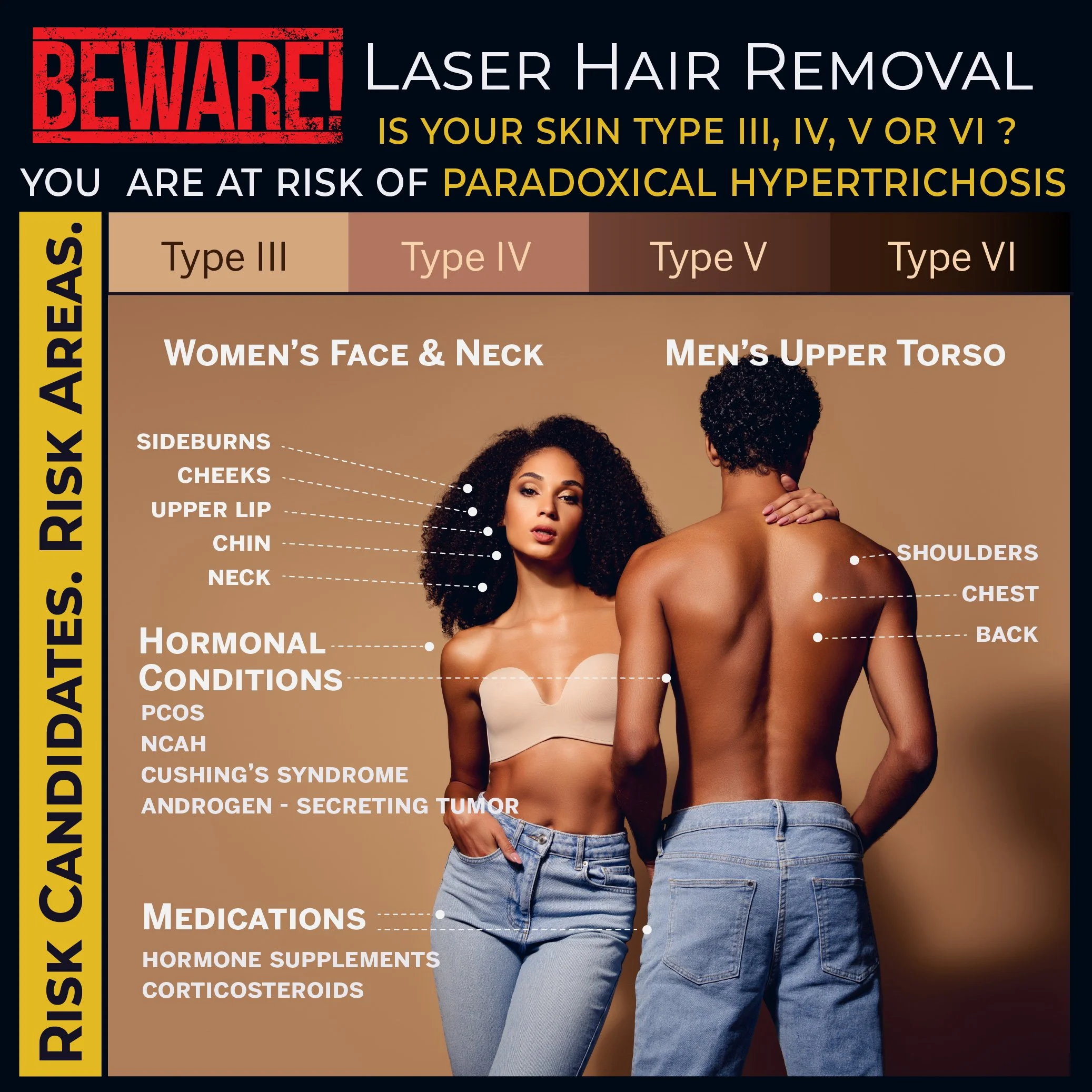
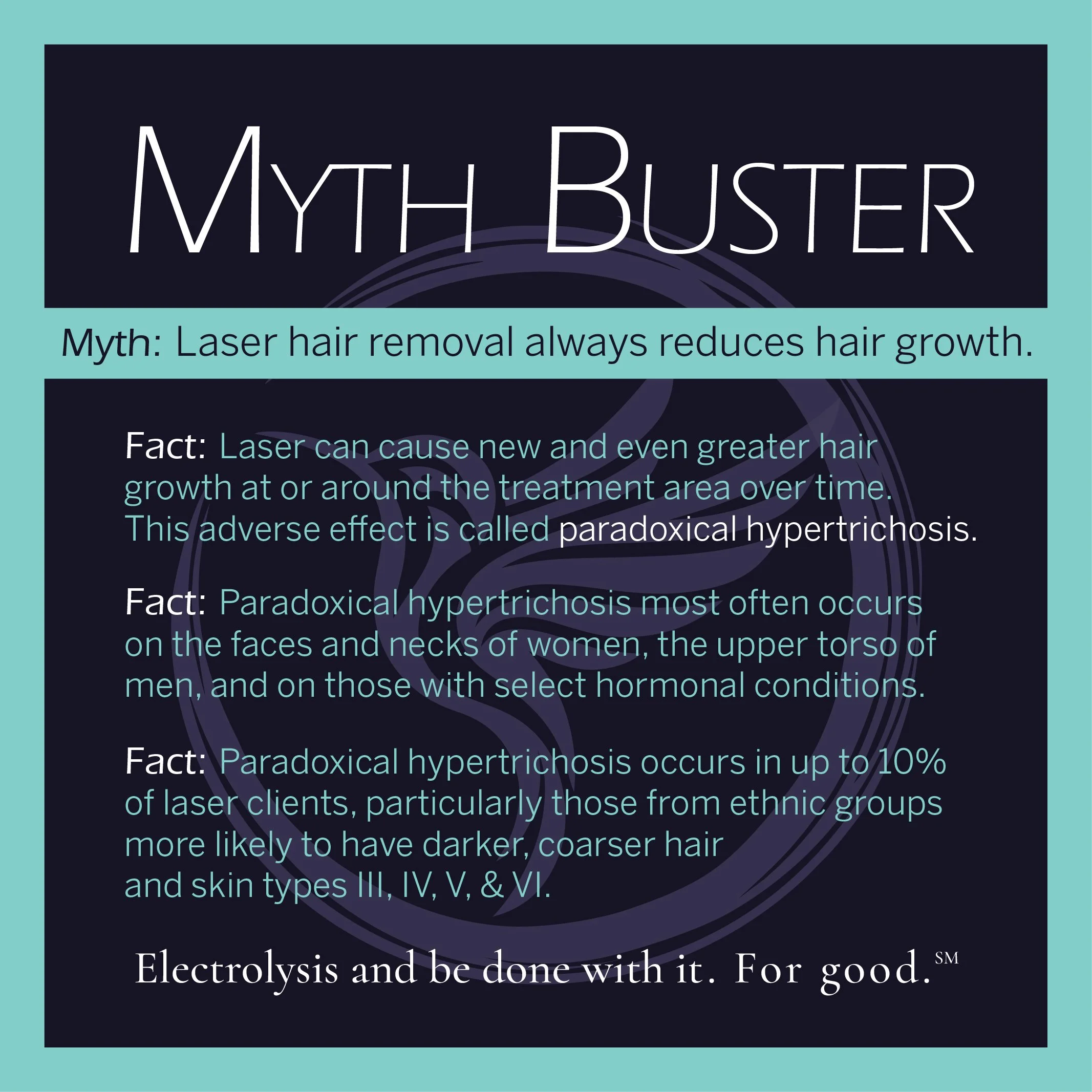
This procedure is restricted in most states, to only being administered by a medically licensed professional like a nurse or doctor because of the potential risks associated with misuse as well as the adverse effect of new hair growth called paradoxical hypertrichosis.
Less Time Grooming. More Time Living.
Shaving, trimming, waxing, and other grooming routines demand ongoing maintenance. Even professional grooming only provides temporary results before unwanted hair returns.
Electrolysis offers something different.
By permanently treating individual hair follicles, electrolysis reduces the need for continual maintenance, allowing you to spend less time managing hair and more time enjoying the activities that matter most.
See if you are you a Laser Candidate »
The first laser was the ruby (red) laser invented in1960. It was later manipulated to target melanin in the hair by Dr. Rox Anderson and Melainie Grossman, which was the beginning of laser hair removal (LHR). Although it was not approved by the Federal Drug Administration (FDA) until 1997, it’s not FDA approved as a permanent method of hair removal but rather a method of hair reduction; thus, many gender reassignment surgeons will only prescribe electrolysis for pre-operative care. Some insurance companies won’t cover LHR even if it is approved by a surgeon because it’s not an FDA approved method of permanent hair removal.
Permanent hair reduction is defined as, “the long-term, stable reduction in the number of hairs regrowing after a treatment regime. The number of hairs regrowing must be stable over a time greater than the duration of the complete growth cycle of hair follicles, which varies from [18 to24 months depending on the area of the body being treated]”. source »
Pros of Laser Hair Removal
Fast treatment time
Long-lasting results with a lifetime of maintenance treatments
Regrowth is often finer & lighter
Safe for many body parts when deemed a candidate
Makes dense body hair more manageable
Can serve as precursor to electrolysis on dense body parts like legs and genital region
Cons of Laser Hair Removal
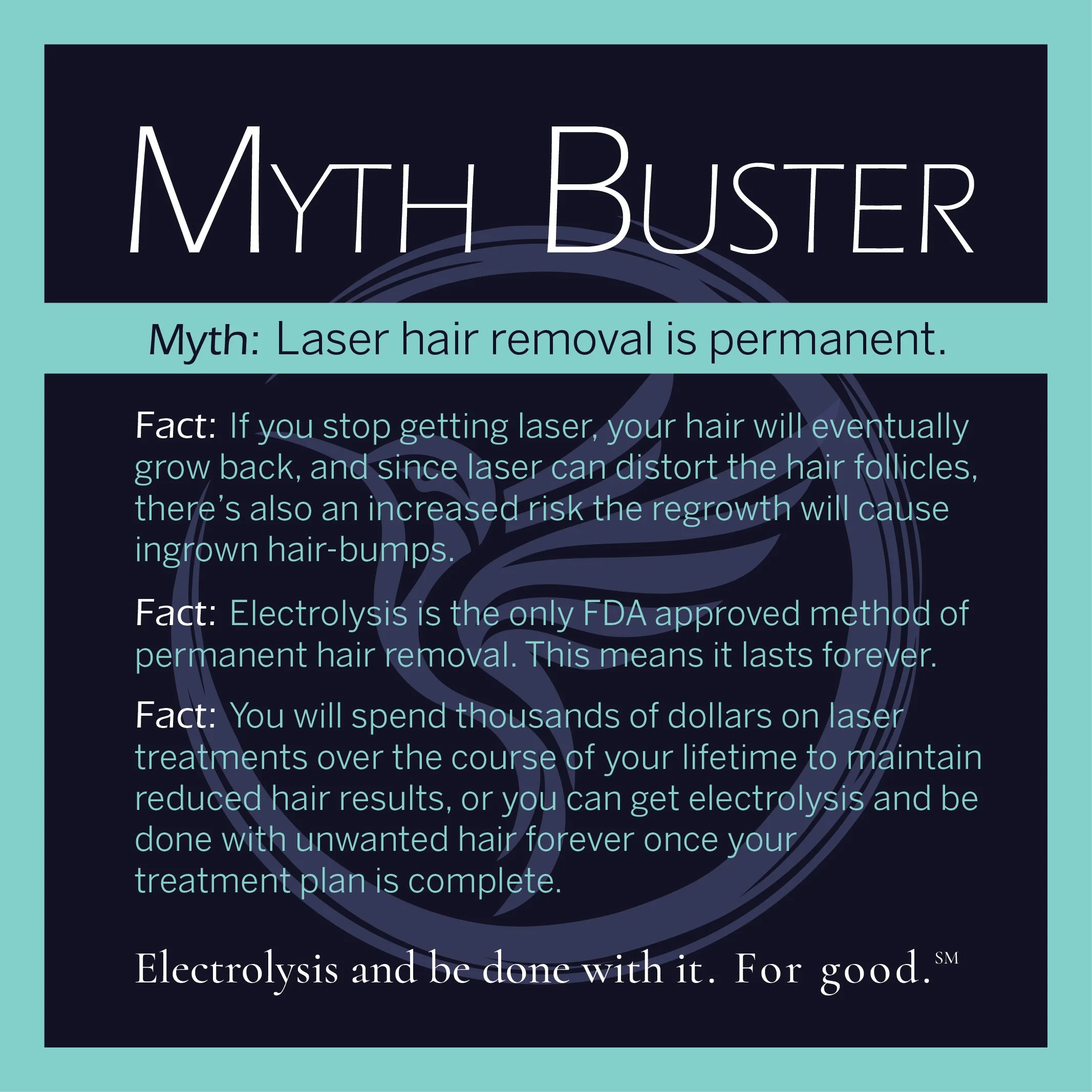
Never permanent; requires ongoing maintenance over time
Imprecise, cannot target individual hair follicles and therefore effects multiple follicles at a time
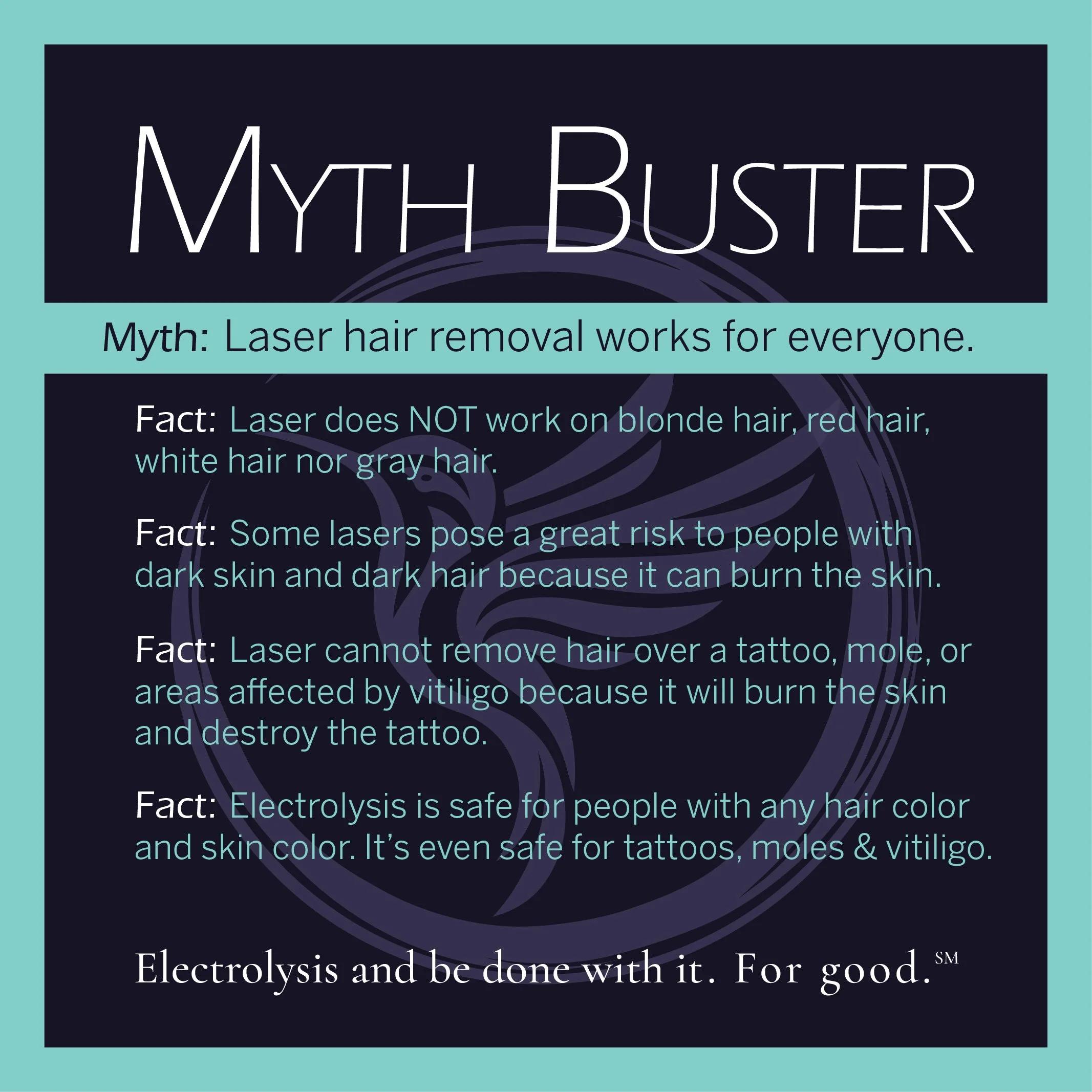
Not all Lasers are as effective on blonde, red or grey hair, nor on brown to black skin tones with dark hair; can burn the skin in these cases.
Significantly reduced efficacy on thin, fine hair
Cannot be used in tattooed areas, can burn the skin and ruin the tattoo
Cannot be used on densely freckled skin or on moles with hair in them, can burn the skin
More expensive than a permanent solution (electrolysis) over the course of a lifetime
⚠ Side Effects of Laser Hair Removal
Can stimulate "peach fuzz" to grow into thicker, darker hairs on face, neck, shoulders, chest and back. Learn more about paradoxical hypertrichosis (PH)
Increased threat of PH on those with androgen-related hormonal imbalances and those taking corticosteroid or hormone supplements
Distorts follicles causing risk of ingrown hairs upon regrowth; especially on those with wavy and curly body hair
Poses burn risks to those taking photosensitive medications like antihistamines, tetracycline antibiotics, and oral contraceptives. All should be stopped at in advance of treatment and we still recommend asking your doctor before proceeding
Types of Laser Hair Removal?
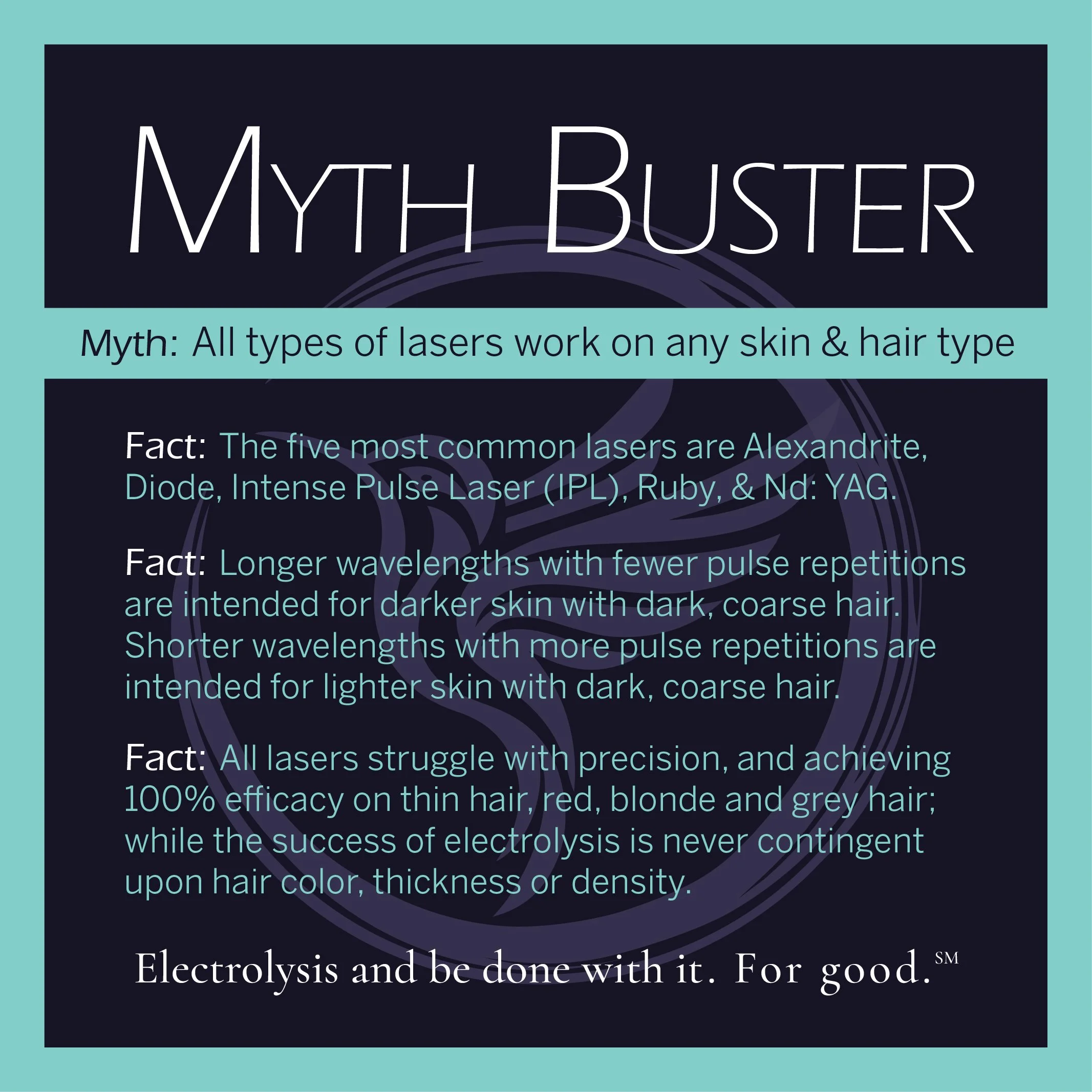
All lasers in the LHR industry have limitations. Understanding them, will help you make a better informed decision when choosing LHR and a professional you can trust.
The following information is NOT exempt from the warnings we present across our digital platforms about LHR’s potential to cause paradoxical hypertrichosis in the danger zones of the body. It’s a general list based on how different types of laser are intended for use per the LHR industry and on beauty publisher’s media content.
We have only reported information we were able to confirm consistent messages across a minimum of three online sources, and continue to encourage all readers to continue their own research on the subject before deciding on LHR. Remember, one size never fits all.
-
Infrared laser system
✧ Considered one of the fastest laser technologies for hair removal, making it especially useful for larger treatment areas.
✧ Generally most effective on lighter skin tones with dark, pigmented hair.
✧ Typically best suited for Fitzpatrick skin types I–III.**
✧ The 755 nm wavelength has strong melanin absorption, allowing it to effectively target fine-to-medium dark hair that may be more difficult for some longer-wavelength lasers to treat.
✧ Can be especially effective for areas such as the underarms, although results vary by body area, hair density, and individual response.
✧ Treatment can feel more intense than some other systems, particularly when higher settings are used.
✧ Requires greater caution on darker or recently tanned skin, as the higher melanin absorption can increase the risk of burns, irritation, and temporary or persistent pigmentation changes.
-
Infrared laser system
✧ Highly effective for coarse, dark, pigmented hair.
✧ Commonly used on light-to-medium skin tones (Fitzpatrick I–IV),** although some diode systems can be safely used on darker skin when appropriate wavelengths, settings, and cooling are used.
✧ Its longer wavelength penetrates more deeply than Alexandrite and generally interacts less strongly with epidermal melanin, potentially making it suitable for a broader range of skin tones.
✧ Fast repetition rates and larger treatment areas can significantly reduce treatment time.
✧ Particularly useful for larger areas and dense, coarse hair, including the underarms, bikini area, back, chest, and legs.
✧ Treatment comfort varies considerably by device; modern diode systems may incorporate contact cooling or other technologies to improve comfort.
✧ Some diode platforms allow practitioners to adjust parameters such as pulse duration, fluence, repetition rate, and cooling according to the patient's skin and hair characteristics.
✧ Diode technology has now been used for many years and has a substantial clinical evidence base, although outcomes vary among individual devices and treatment protocols.
-
Broad-spectrum intense pulsed light; not a true laser
✧ IPL is not technically a laser. Instead of emitting one specific wavelength, it produces a broad spectrum of light that is filtered to target particular chromophores, including melanin.
✧ Generally most effective for lighter skin with darker hair, particularly Fitzpatrick skin types I–III.**
✧ Because IPL uses a broad range of wavelengths, treatment parameters and filters can be adjusted for different skin and hair characteristics.
✧ Requires additional caution on olive, brown, and darker skin tones, where epidermal melanin can absorb more energy and increase the risk of burns and pigmentation changes.
✧ IPL and laser treatments performed on certain areas—particularly the face and neck—have also been associated with paradoxical hypertrichosis, or increased hair growth. This risk appears to be more relevant in some darker skin types and with certain treatment parameters.
✧ Large spot sizes and rapid pulses make IPL useful for treating larger areas relatively quickly.
✧ IPL technology is commonly found in consumer at-home hair-reduction devices, although these typically operate at substantially lower energy levels than professional systems.
✧ Effectiveness varies significantly between IPL devices, and professional medical-grade lasers may provide more predictable results for some patients.
-
Infrared laser system
▸ Nd:YAG stands for neodymium-doped yttrium aluminum garnet.
▸ Its long 1064 nm wavelength penetrates relatively deeply and is absorbed less by epidermal melanin than shorter wavelengths.
▸ Often considered one of the preferred laser options for darker skin tones, including Fitzpatrick skin types IV–VI,** when used by an appropriately trained provider.
▸ Can also be used on lighter skin, although Alexandrite or diode systems may be more efficient for some patients.
▸ Generally less effective on fine or lightly pigmented hair because the 1064 nm wavelength has lower melanin absorption.
▸ Can be used on virtually all body areas; suitability for large versus small treatment areas depends heavily on the particular device, spot size, repetition rate, and treatment protocol.
▸ Frequently used for areas containing coarse, deeply rooted hair, including the underarms and bikini area.
▸ Comfort varies by device and settings. Effective cooling can substantially improve treatment tolerance.
-
Red-light laser system
✧ The Ruby laser was the first laser technology developed and studied for selective laser hair removal.
✧ Its 694 nm wavelength is strongly absorbed by melanin, making it most appropriate for very fair to light skin with dark hair, generally Fitzpatrick skin types I–II.**
✧ Because of its high melanin absorption, it is not generally recommended for darker or tanned skin, where there is a greater risk of epidermal injury and pigmentation changes.
✧ Less effective for blonde, red, gray, white, or very lightly pigmented hair, as with other melanin-targeting hair-removal technologies.
✧ Traditional Ruby systems generally have slower repetition rates and smaller treatment areas, resulting in longer sessions compared with many modern Alexandrite and diode systems.
✧ For this reason, Ruby lasers are now far less commonly used for hair removal than Alexandrite, diode, and Nd:YAG technologies.
sources: PFMAJournal , DermaHealth Institute, Good Housekeeping, Skinney Med Spa,
** Fitzpatrick Skin Types III, IV, V & VI should always use caution when getting LHR on known danger zones because of the risk of paradoxical hypertrichosis And all skin types should use caution of if they have an underlying hormonal condition due to an androgen imbalance or are taking hormone supplements or corticosteroids.
Important considerations for all laser and IPL hair-removal treatments
Fitzpatrick skin type is not the only factor in determining the safest and most effective treatment. Hair color, hair thickness, treatment area, recent sun exposure or tanning, medications, hormonal influences, device type, wavelength, influence, pulse duration, cooling, and practitioner experience can all affect both results and risk.
Individuals with Fitzpatrick skin types III–VI should receive appropriately selected wavelengths and conservative treatment parameters, particularly when treating areas associated with a higher risk of pigmentation changes or paradoxical hypertrichosis. Darker skin is not automatically unsuitable for laser hair removal; rather, the choice of laser and treatment settings becomes especially important.
Paradoxical hypertrichosis—an unexpected increase in hair growth following laser or IPL treatment—is uncommon but recognized. It has been reported more frequently in certain treatment areas, particularly the face and neck, and may be influenced by skin type, hair characteristics, hormonal factors, and insufficient or inappropriate treatment energy.
People with underlying hormonal conditions, androgen excess, or medications that influence hair growth should discuss these factors with a qualified medical professional. Laser and IPL can reduce existing hair, but they do not treat the underlying hormonal cause of excessive hair growth, which may affect the number of treatments required and the likelihood of regrowth.
Learn More!
We have a website dedicated to our Beware of Laser campaign and we encourage you to review it, but stay tuned because we will be bringing all that content here so you can get everything you need to know in one place.